How I use AI

Task

I use AI across the whole job: in my design tools every day, in a system I built to help a client run their online store, and in personal projects. I design each AI system like a product: clear roles, one owner per job, checks before work moves on and a dashboard that shows where things stand.

  • Strategy

    System design, dashboards, quality checks

  • Design

    AI in Figma, WordPress and Opal, dashboards, film

  • Role

    Designer and builder, client and personal projects

How I use AI · Design, clients and my own projects

I design the systems that make AI dependable

AI is fast at a first pass and poor at staying consistent, so I design the system around it. Three examples: the AI in my design tools, a system I built for a client’s online store, and a short film made by one person. Pick one to jump there.

01. In my design work

AI in the tools I design with every day

AI is part of how I work, not a side project. In each tool it does the repetitive part: building, checking, drafting, cleaning up. I set the rules it works to and decide what stays.

Figma

Design systems, with AI connected to the file

What the AI does
Works inside the Figma file through a connector: binds every colour to its variable, lays out component variants and finds parts that break the system.
What I decide
The tokens, the rules each component follows and which fixes go in. The bigDAWGS design system is the example here.
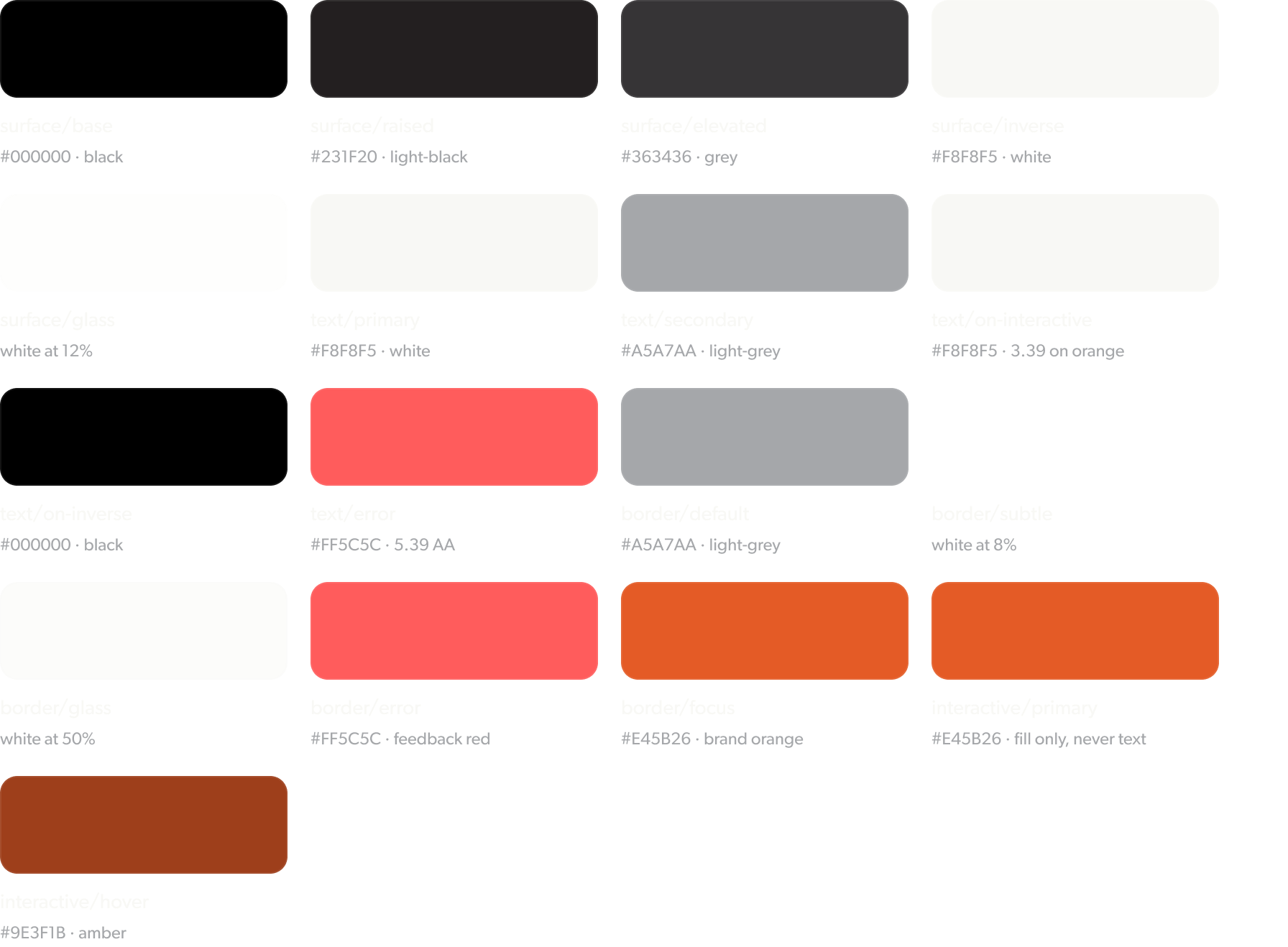
Colour variables from the bigDAWGS Figma file: each swatch with its hex value and the role it plays
Colour tokens: every swatch bound to its variable
02. Client work

An AI team that helps run a client’s online store

I built an AI system for a client, a crystal and candle brand, so the owner can run the shop with less guesswork. A lead role plans the work and hands it to roles with one job each, every file has one owner, and a dashboard I designed shows the owner what’s done, what’s waiting on them and what comes next.

How it works
  1. A lead role plans the weekIt hands out the work and answers to the owner.
  2. Roles with one job draft the workListings, the website, marketing, operations and the numbers, each written by its own role.
  3. The owner reviews and decidesEverything lands in one dashboard, so the owner approves instead of writing.
Three decisions in the dashboard
  1. It opens on what needs the owner, not on charts.The first tab is the owner’s own task list. The team files each task with a tag and a priority, so the day starts with decisions, not data.
  2. One checklist per product.Every product goes through the same steps from stock to packaging, and the next one in the queue is always on top. Nothing goes live with a box unticked.
  3. Flags instead of more charts.The numbers tab shows a few figures against the monthly goal and marks any week outside its usual range, so a dip gets noticed without reading every chart.
What changed for the owner
  • About 8 hoursback each week, my estimateWeekly numbers, listing drafts, the week’s plan and website copy arrive drafted. The owner reviews instead of writing.
  • Problems foundnot guessed atWhen sales dip, the system checks the weekly numbers and every listing, points to where the problem is and suggests the fix.
  • No more side appsfor notes, tasks and templatesNotes, tasks and product checklists live in the system. The owner asks for what she needs in plain words.

“When sales dipped, I used to have no idea why. Now it checks the numbers and every listing each week, shows me the problem and how to fix it, and I just tell it what I need instead of juggling three apps.”

The owner, a crystal and candle brand

The owner’s dashboard: a simplified recreation with sample data. Same tabs, same order and same building blocks as the real one; the shop’s figures stay private.

Studio boardA crystal and candle brand
Sample data
FilterTo do 4Doing 2Done 3High priority 2Due this week 3
To do4

Approve 3 new listing drafts

HighListings

Pick the photos for the gift set

HighProducts

Set the holiday shipping cut off date

Orders

Choose next month’s featured product

Marketing
Doing2

Review the new About page copy

Website

Restock the small gift boxes

Restock
Done3

Answer the wholesale enquiry

Approve this week’s pins

Update the care card

Simplified recreation, sample dataThe shop’s name, products and figures stay private
03. The Way Home · Personal project

A short film, made through ten small AI apps

Image tools don’t remember the last shot, so faces and places drift. I built the film as a chain of small apps in Google Opal. Each step has one job and its own output, a review scores the whole plan before anything is made, and repair steps fix only what it flags. Click a step to see what goes in, what comes out and how it’s checked.

01 · Script refiner

Input

The story, in a few paragraphs

Output

A screenplay and a production report

Check

A script doctor review before it moves on

The Way Home, the full film, about four minutes

Explore the full project
04. Other experiments

Smaller systems I built to test ideas

Four personal projects, each built the same way as the systems above. Open a card for how it works and what it found.

Market research tool

Finance Manager

AI roles that screen the market, research and score companies, and a dashboard that opens on what to do today. A personal project; I make every call.

How it works
The roles
ScoutPrepAnalystLead
How it runs
The scout finds companies worth a look, the prep role gathers filings, prices and news, and the analyst values each one in a bad, likely and best case and sets a buy price. The lead role signs the odds and writes the orders.
What I designed
The dashboard opens on the answer: what to act on today, then what’s close, then what needs me. Every number carries its source and date, and the page warns me when its status is older than the newest research.
The honest target
Match a global index fund after fees, not promise to beat the market. Not investment advice.
Engineering study

Duper Car Labs

It started as a car that could fly, dive and drive. Now five AI roles test whether a one seat electric aircraft that lands on water could work, with a source behind every claim.

How it works
The team
Chief of StaffResearch and feasibilityEngineering conceptDesign and visualizationCommercialization and IP
The concept
A one seat electric multirotor that lands on water or flat ground on its floats and takes off again, sized for the US ultralight rules (FAR Part 103). Phase 1 is digital only: prove it in simulation with parts sold today.
The rules
Every market, physics, regulation or patent claim is searched in the same session. With no source, the file says “could not source”, and the team has to say plainly when something won’t work.
What it found
The first concept was shelved. The current one floats and lifts off the water, but at the ultralight weight limit its battery gives about 5 minutes of flight against a 15 minute target. The study reports that instead of hiding it.
Research tool

Idea Verifier

Give it a business or product idea and it researches the market, the costs and the revenue, then says plainly whether it works.

How it works
How it runs
1 Clarify2 Research3 Feasibility4 Build and run5 Revenue6 Verdict
What the AI does
Searches the web for the market size, three to five competitors and their prices, and any new rules in the space. It keeps the build cost apart from the monthly running cost, gives a best, likely and worst case for the first year with a break even date, and cites a source for every number.
The verdict
Works, works with changes, or doesn’t work, with the top three reasons and the single biggest risk.
What I built
The instructions. It’s told not to talk me into ideas, and to search before it quotes any price, competitor or market number.
Product research

OmniWheel Lab

Five AI roles designing, simulating and costing a wheel module for an EV that turns a full 360 degrees, before anything is built.

How it works
The team
Spec editorResearchSimulationVisualizationAnalysis
What the AI does
Builds an interactive 3D model of the module and ranks each part by load, cost and risk, with what would settle each open question.
The rules
Every claim about physics, materials or cost comes with a source and a confidence level. Anything safety critical, like steering, braking or the load path, is flagged for a licensed specialist to check before money is spent.

Happy to walk through any of these systems, and how this way of working would fit your team.

Back