The Way Home: an AI film pipeline

Task

The Way Home is a short film I made on my own with AI in 2026. I built it as a chain of small apps in Google Opal: each step has one job and its own output, a review scores the plan before anything is made, and repair steps fix only what the review flags.
  • Strategy

    System design, quality checks, repair steps

  • Design

    AI apps in Google Opal, reports, film edit

  • Role

    Designer and builder, personal project

How I use AI · The Way Home

A short film, made through ten small AI apps

A four minute sci-fi short, made by one person. Watch it first. Below is the system that kept the same faces and places from the first shot to the last, and the review that caught three errors before any shot was made.

01. The problem

One person, one film, and an AI that forgets

Image tools don’t remember the last shot. A prisoner escapes, gets home to his family and grows old with them, until his world starts to glitch. Every shot was generated, so Jack had to look like Jack in his 40s and in his 70s, and the facility had to be the same white room at the start and the end.

The brief

A cinematic short film made by one person, with the same characters and places from the first shot to the last.

My role

I designed and built the pipeline, ran every step, and made the final edit.

Tools

Small AI apps I built in Google Opal, Higgsfield for the images and video, and Suno for the music.

Year

2026, about four minutes long.

02. The system

Ten steps, each with one job

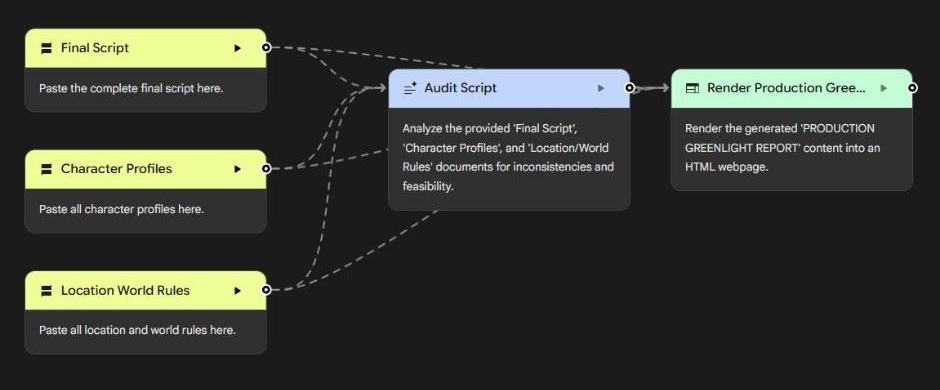
Instead of one long prompt, the film runs through a chain of small apps. Each one takes the previous step’s output, does one job and hands over a document the next step can read. Every document is something I can check before the work moves on.

The greenlight review app in the Opal editor: final script, character profiles and location world rules feed an audit step that renders the greenlight report
Step 4 in Opal: the script, the casting sheet and the location guide feed one audit, which writes the greenlight report
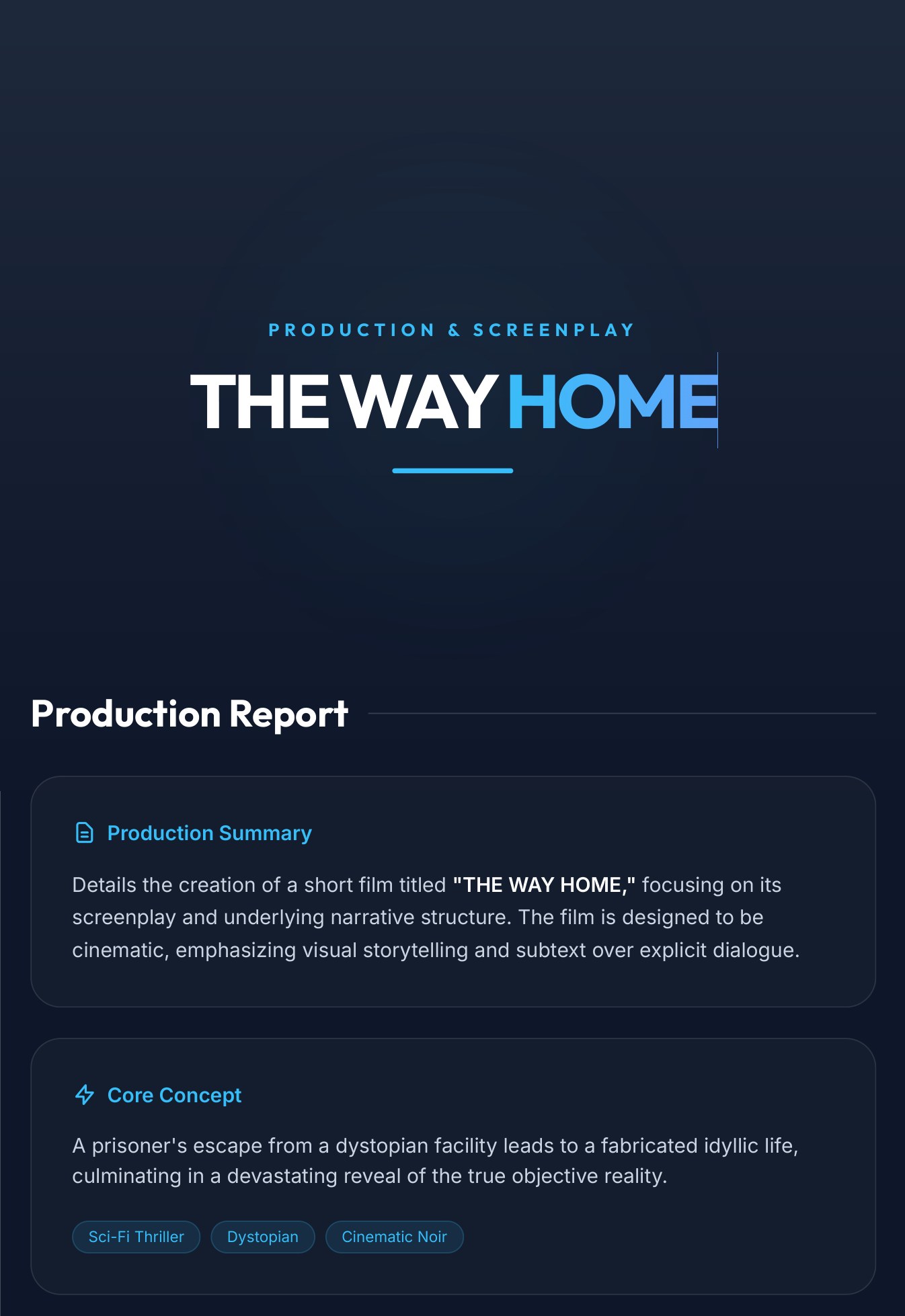
Page 1 of the screenplay and production report: title, production summary and core concept
Step 1 output: screenplay report
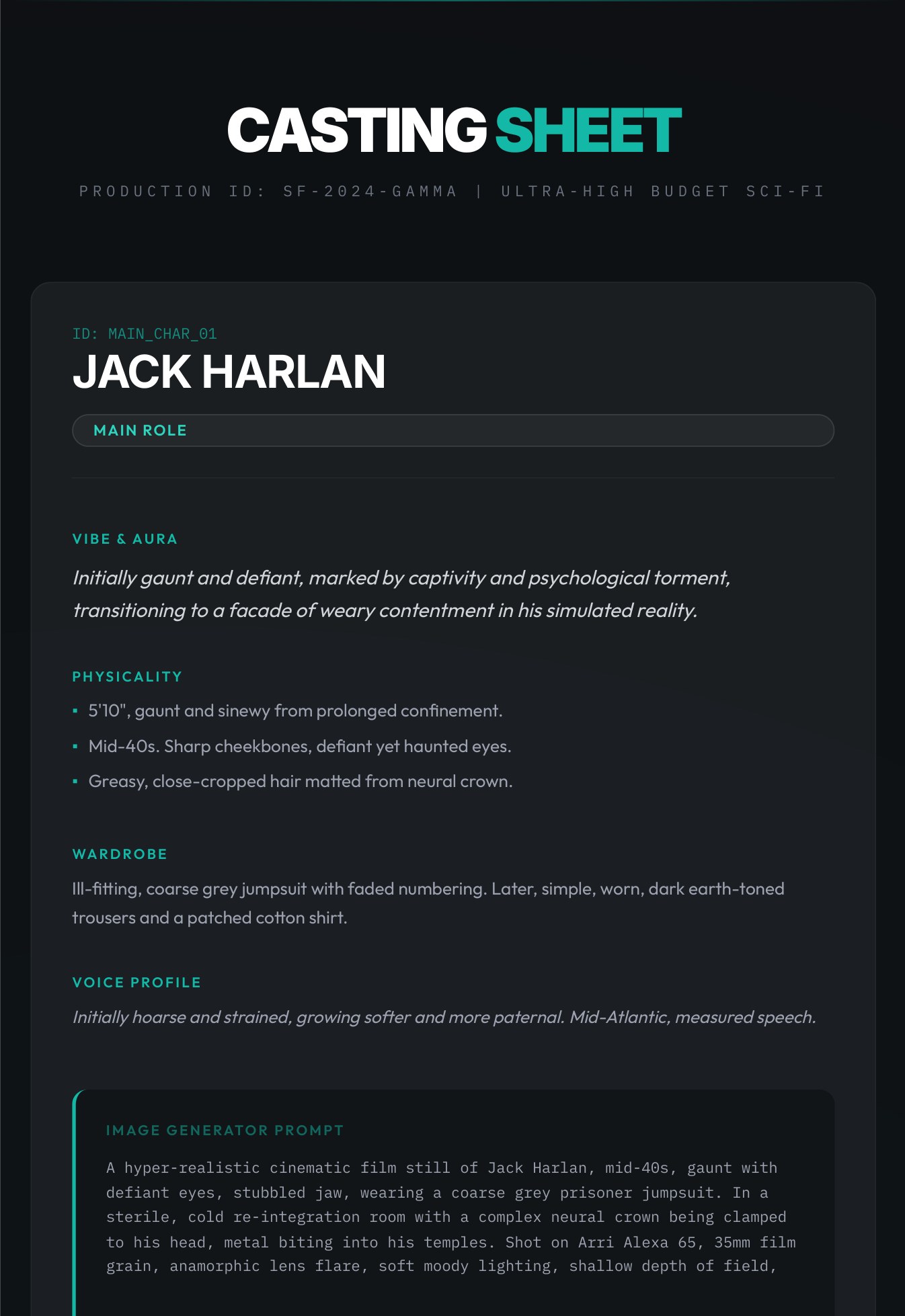
Page 1 of the casting sheet: Jack Harlan with vibe, physicality, wardrobe, voice and image prompt
Step 2 output: casting sheet
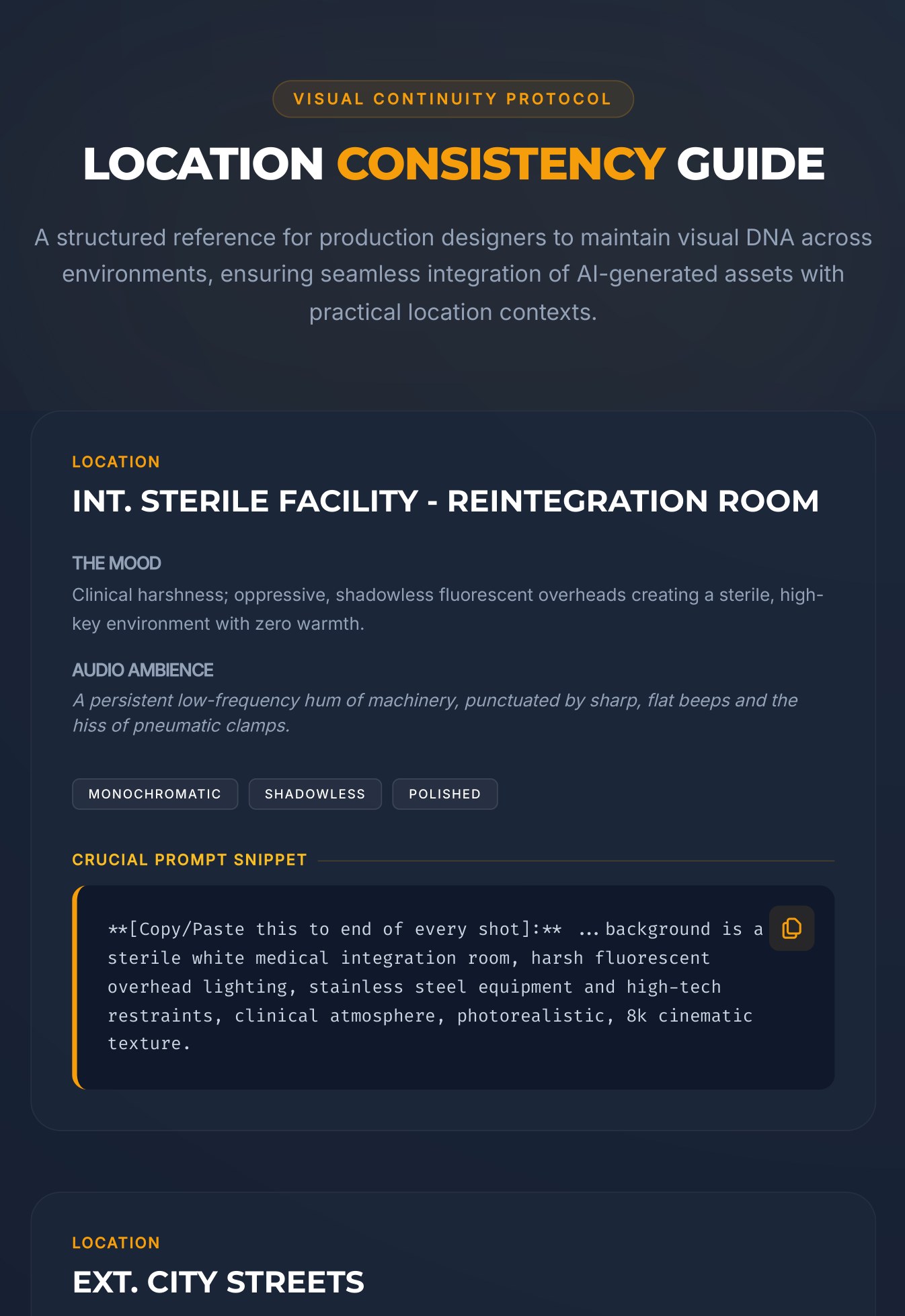
Page 1 of the location guide: the facility room with mood, audio, tags and the prompt snippet for every shot
Step 3 output: location guide
03. The review

Check the whole plan before a single shot

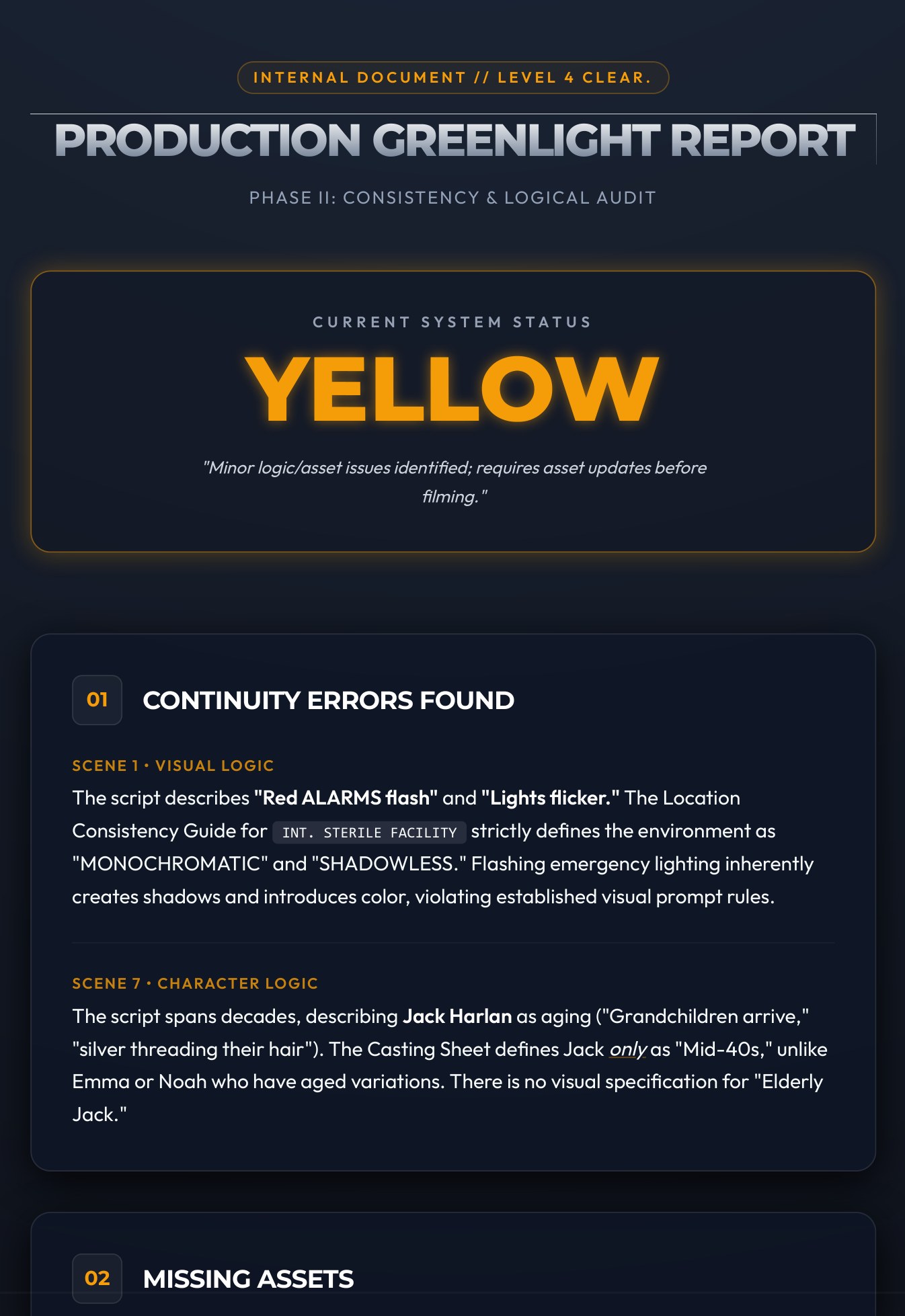
The greenlight step reads the script, the casting sheet and the location guide together, and scores the plan before anything is made. It came back Yellow: “Minor logic/asset issues identified; requires asset updates before filming.” Each problem would otherwise have shown up as a broken shot, when it costs the most to fix.

Scene 1 · Visual logic

The script has red alarms flashing, but the location guide sets the facility as monochromatic and shadowless.

Scene 7 · Character logic

The story spans decades, but the casting sheet only describes Jack in his mid 40s.

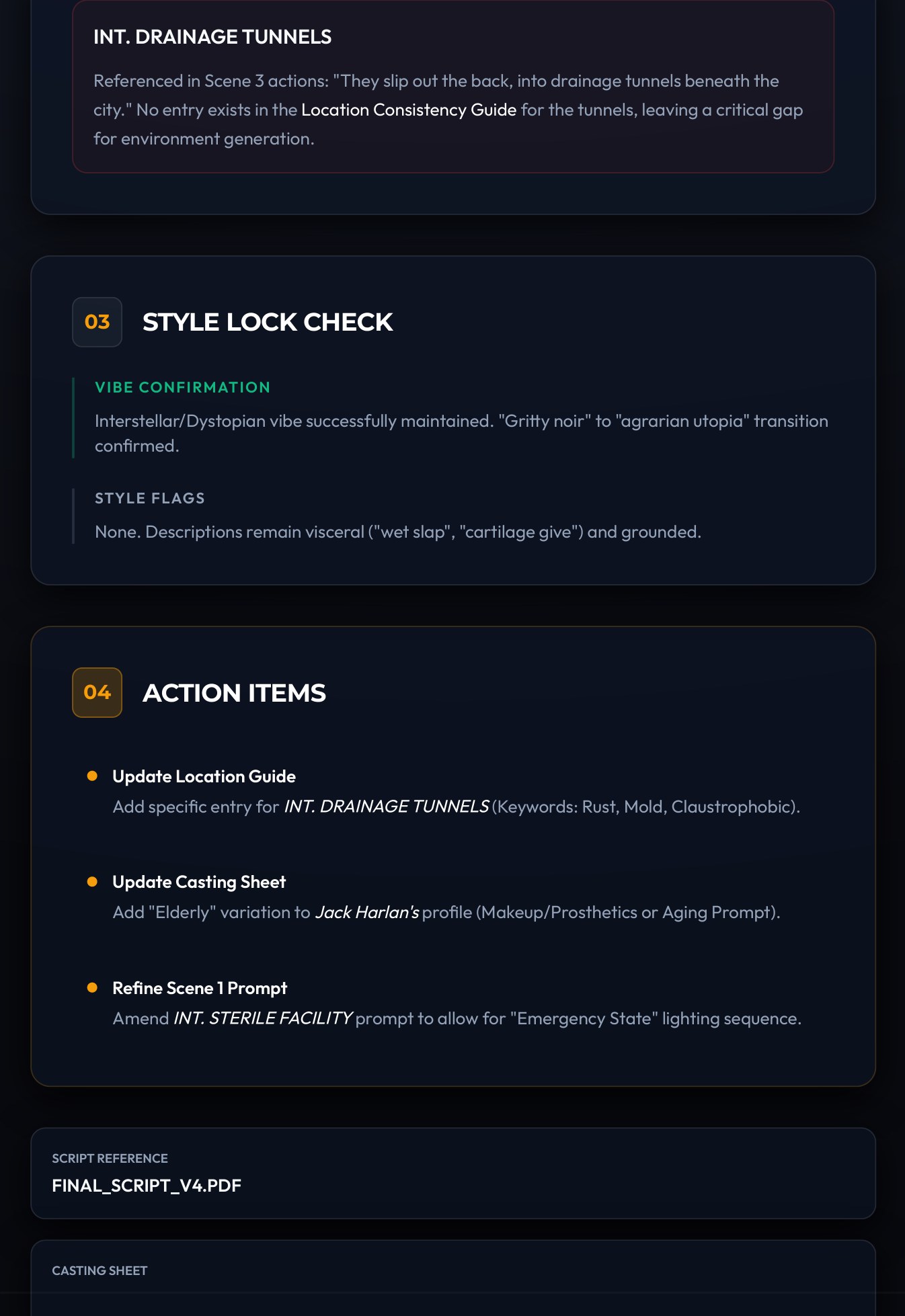
Missing asset

Scene 3 sends the family into drainage tunnels that have no entry in the location guide.

Greenlight report page 1: status Yellow and the continuity errors found in scenes 1 and 7
Greenlight report, page 1
Greenlight report page 2: the missing drainage tunnels, the style check and three action items
Page 2: missing asset and action items
04. Repair

Fix only what the review flagged

Three repair editors take the report and change only what it points to. The script editor works to one rule: fix the flagged errors and keep every other line as it was. It ends by confirming “Fixed 2 errors. 100% of original dialogue and action preserved.”

Script

Two fixes. Every other line unchanged.

Characters

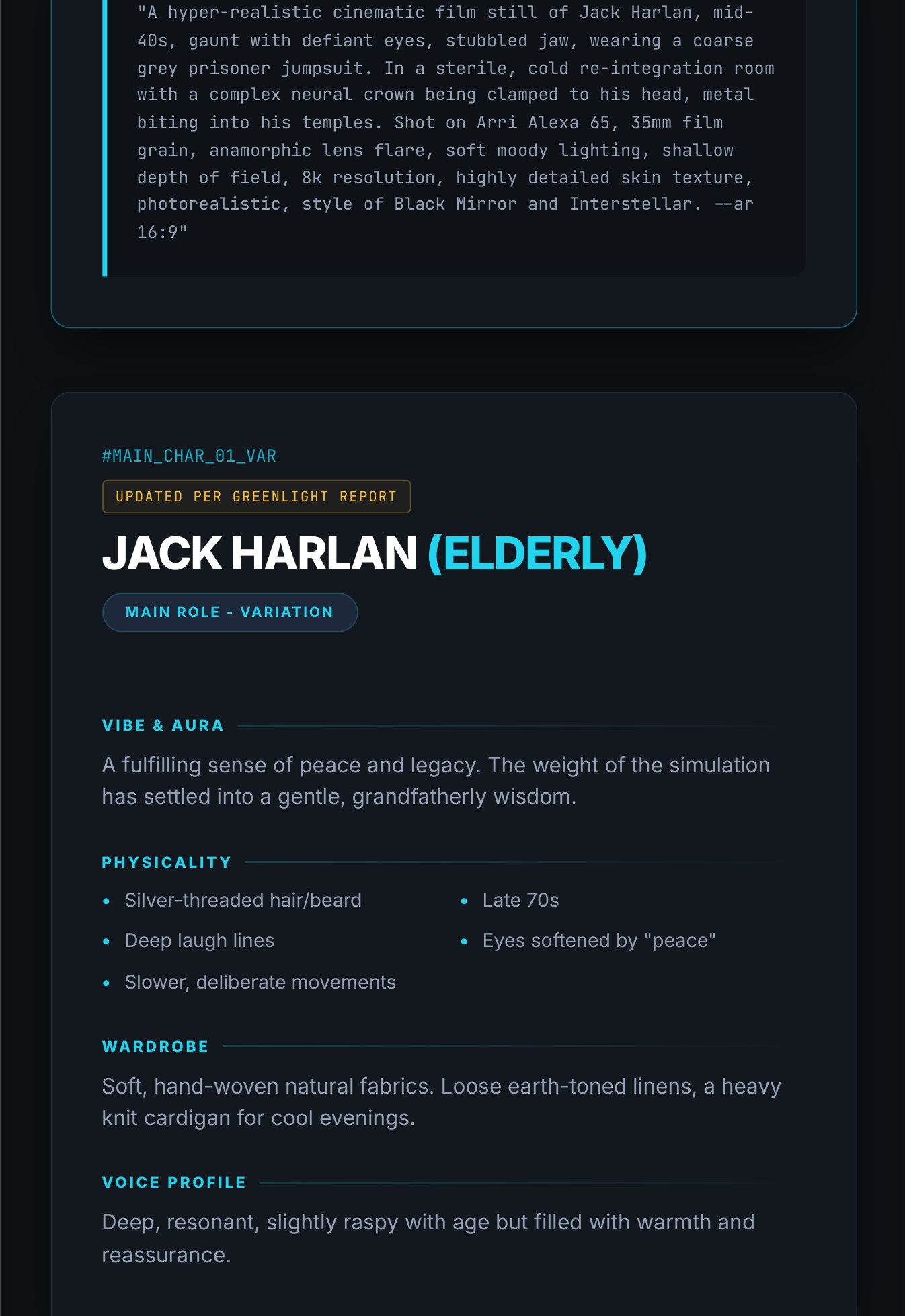
An elderly Jack added to the casting sheet, marked “Updated per Greenlight Report”.

Locations

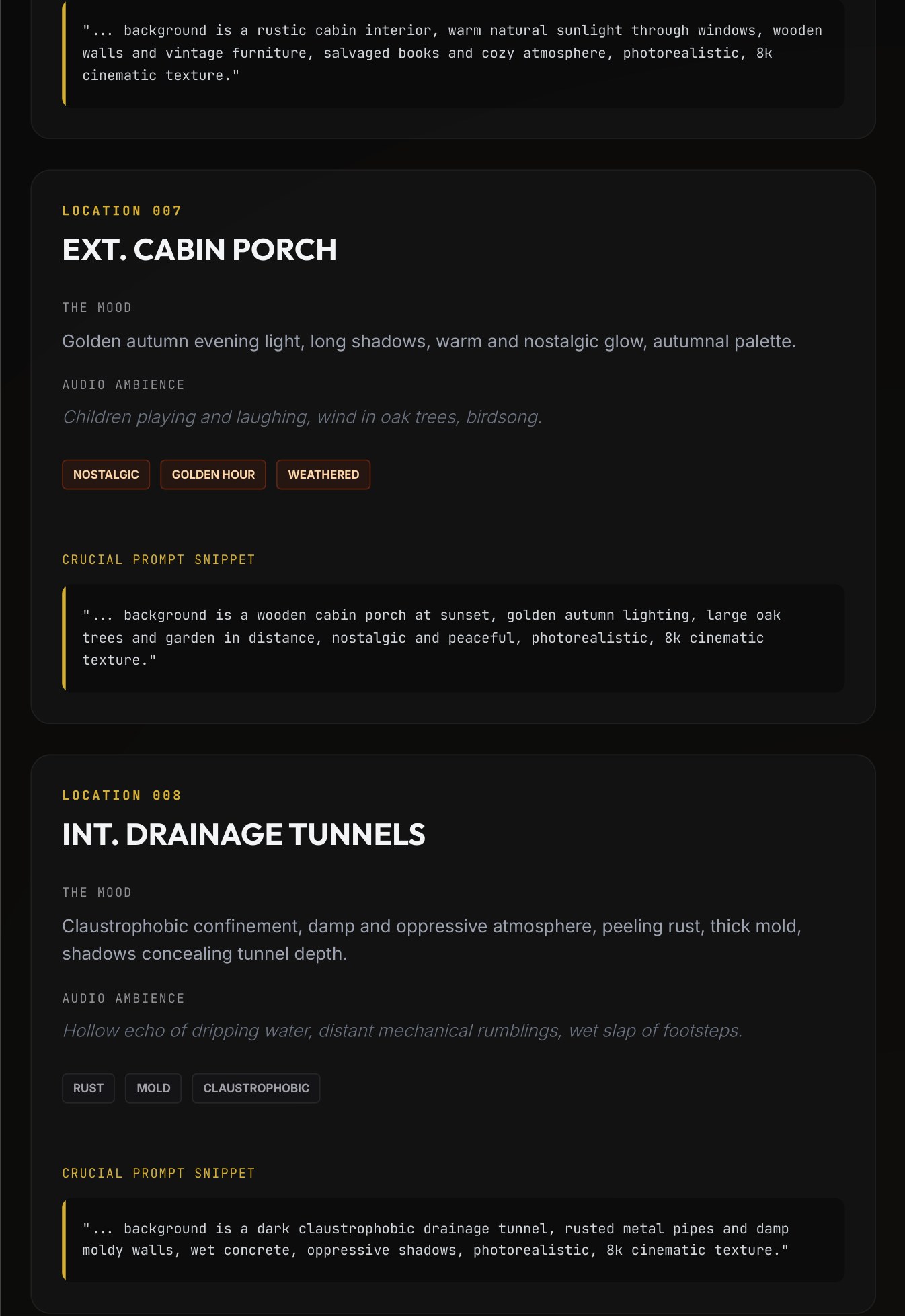
The facility now allows red emergency light, and the drainage tunnels have their own entry.

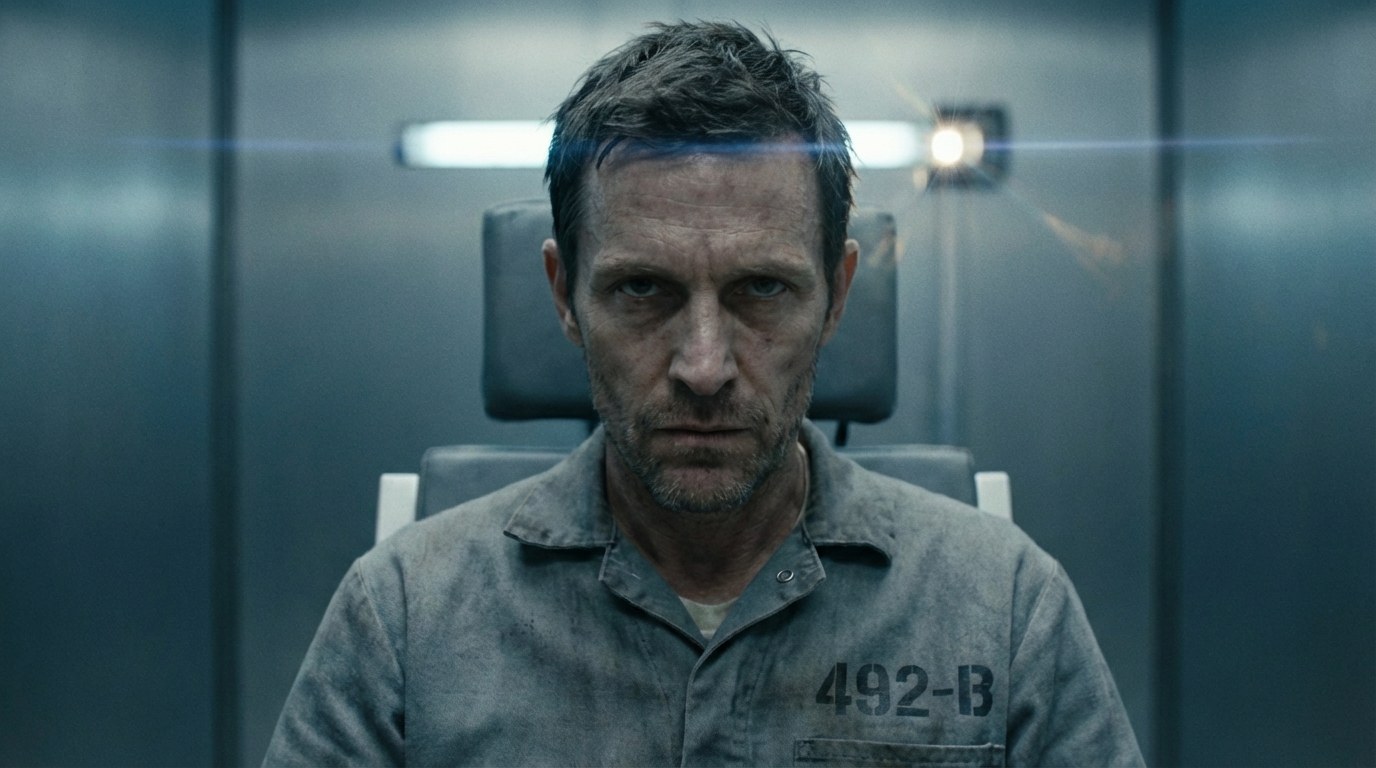
Character reference for Jack in his 40s: gaunt, close cropped hair, grey jumpsuit numbered 492-B
Jack in his 40s
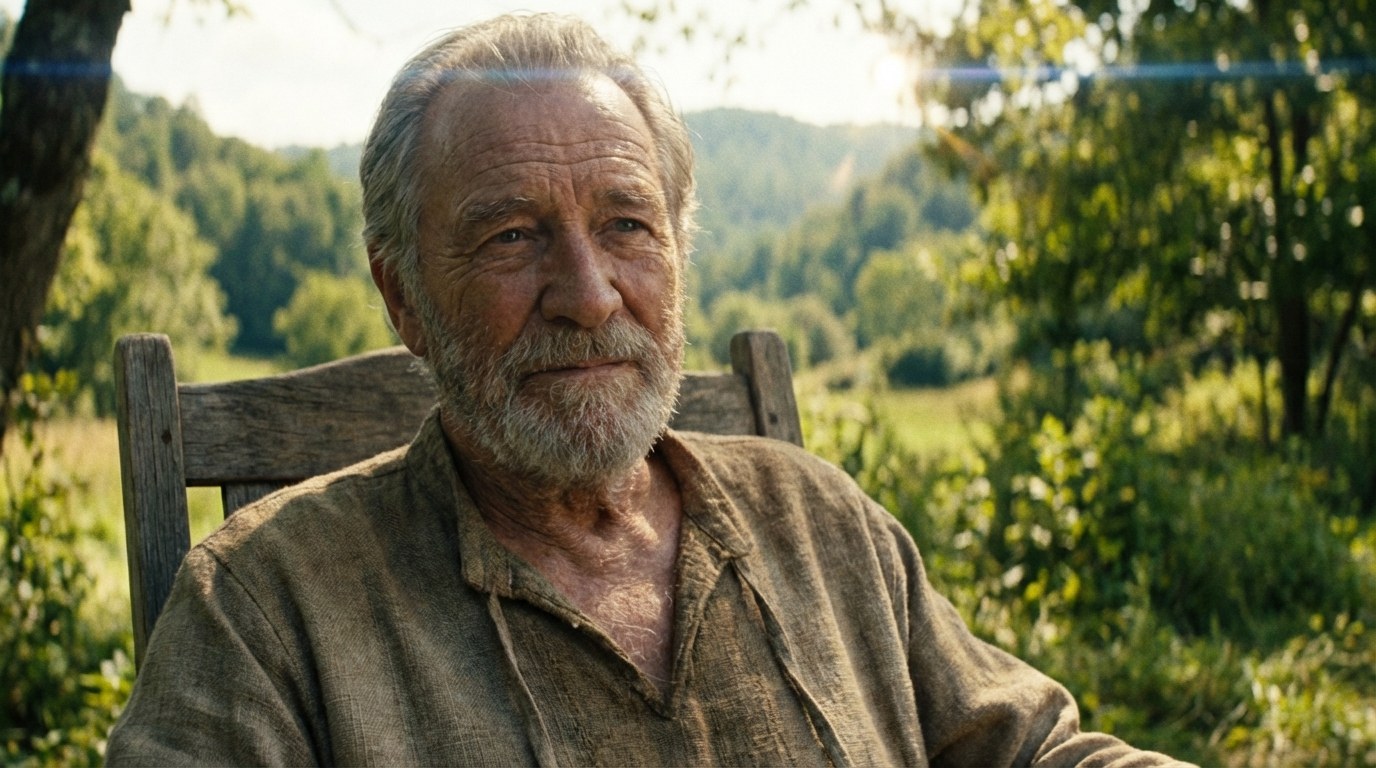
Character reference for Jack in his 70s: silver hair and beard, linen shirt, sitting on a porch chair in a green valley
Jack in his 70s, from the added profile
Repaired casting sheet page: Jack Harlan, elderly, marked updated per greenlight report
Repaired casting sheet: elderly Jack added
Repaired location guide page: the cabin porch and the new drainage tunnels entry
Repaired location guide: the drainage tunnels added
05. Making the film

Check every image, then shoot

Before an image becomes a shot, the asset validator compares it with its profile: age, scars, clothing texture, lighting and camera angle. Then the shot list breaks the script down, the shots are made in Higgsfield, the music in Suno, and the edit finishes the film.

What the AI does

Writes, casts, describes, audits, repairs and generates, one step at a time.

What I decide

What each step does, the rules it follows and what it hands to the next one, and every cut in the edit.

Result

A finished short film, about four minutes long.

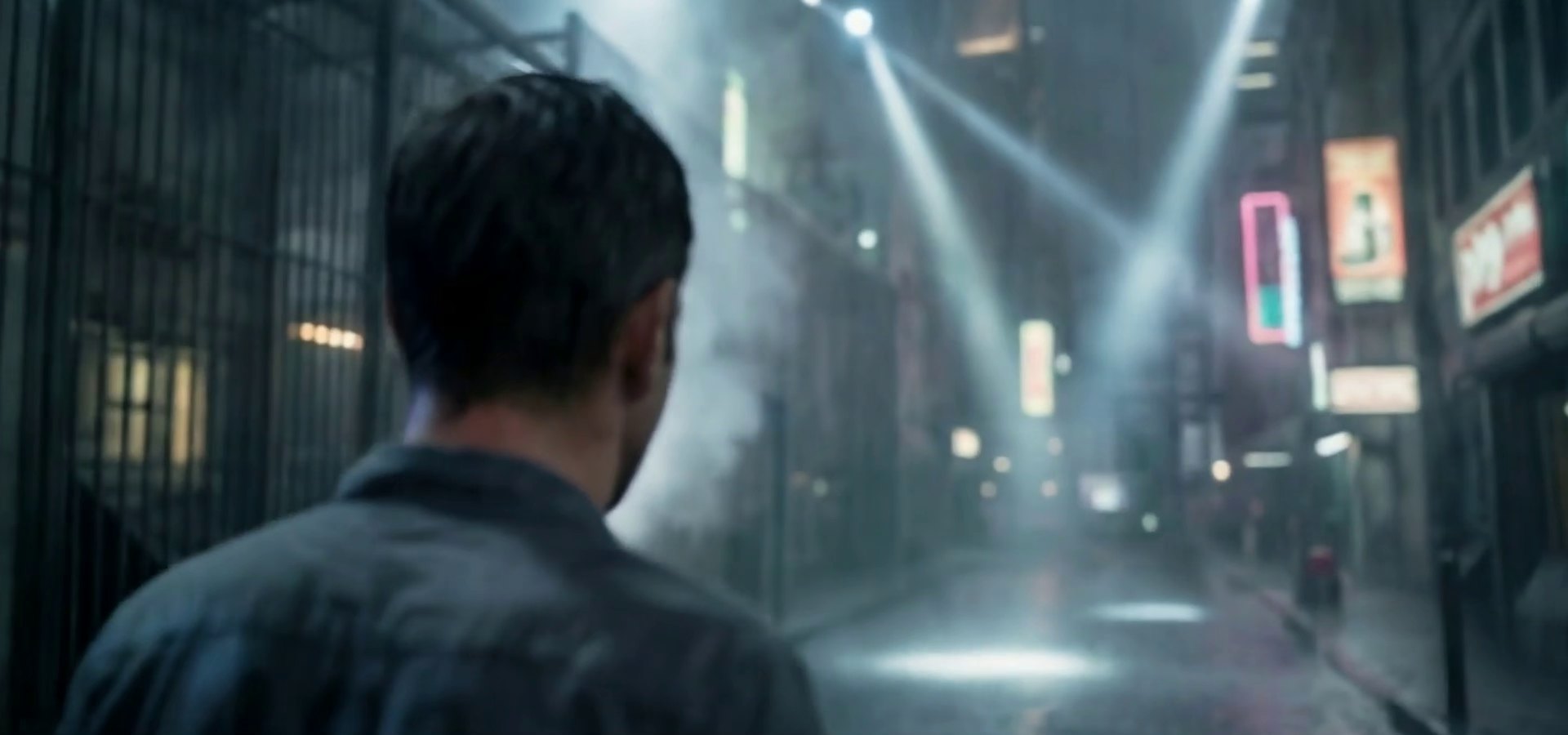
Still from The Way Home: Jack on a rain soaked city street under searchlights
The escape
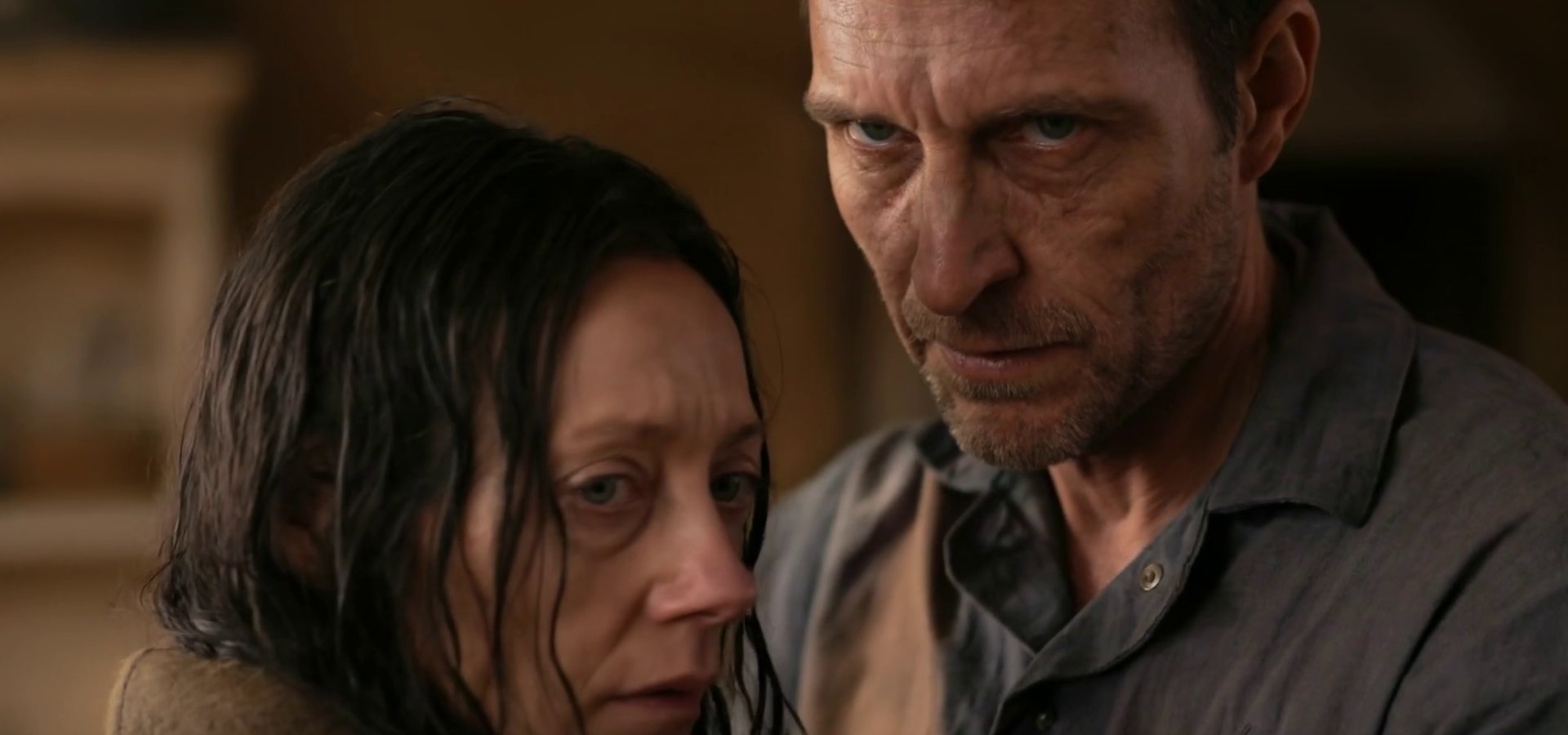
Still from The Way Home: Jack holding Emma after he gets home
Getting home
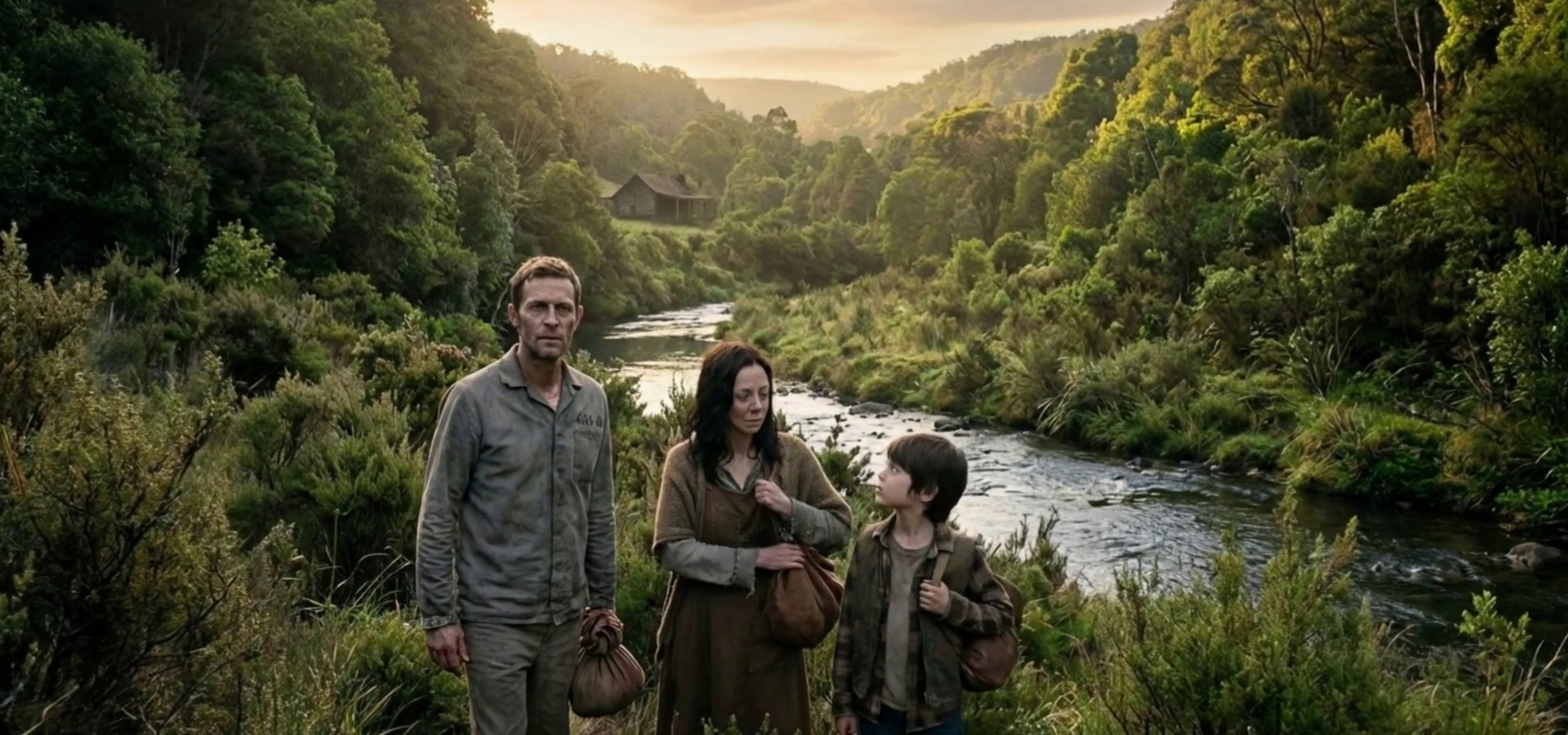
Still from The Way Home: Jack, Emma and Noah arriving in a green valley by a river
The valley
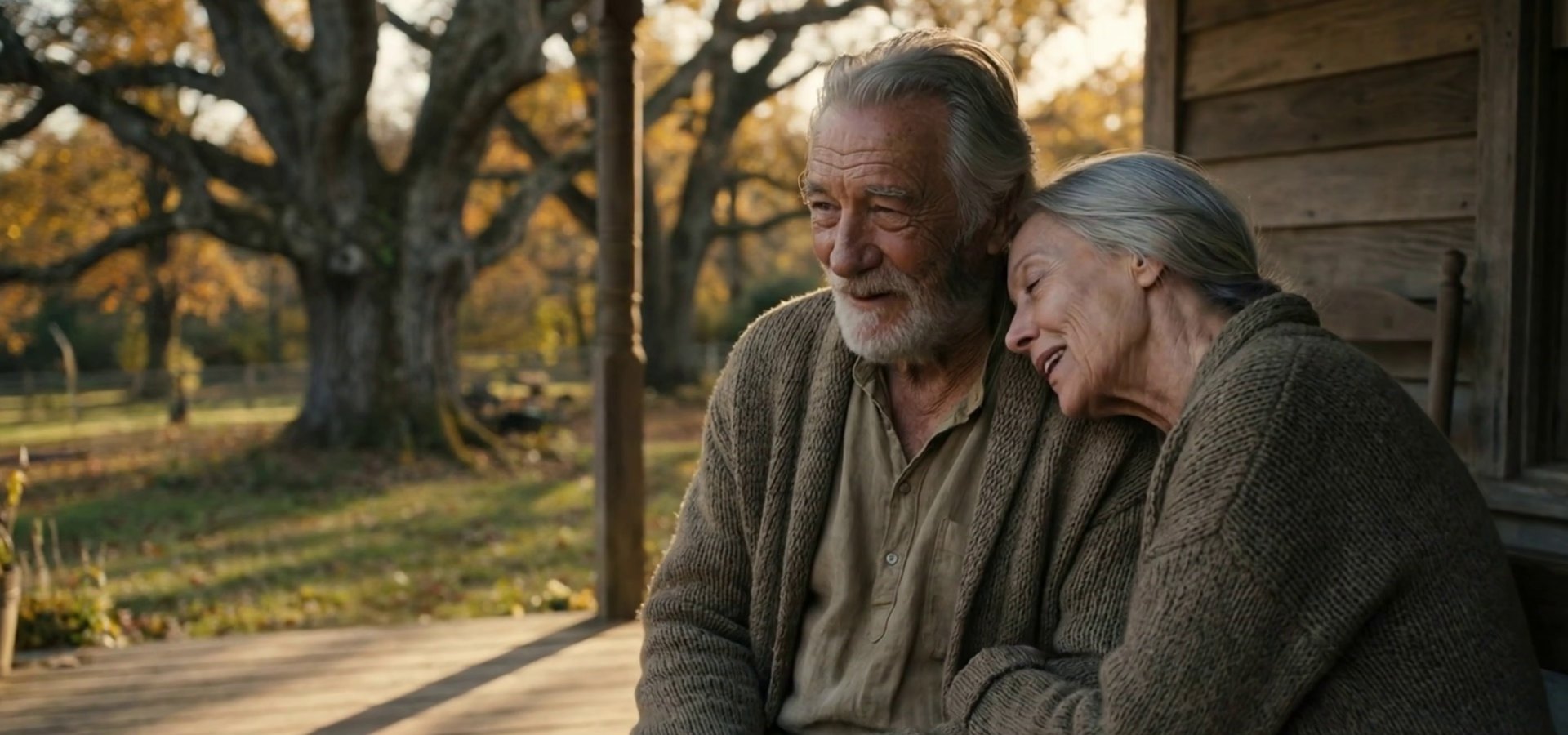
Still from The Way Home: Jack and Emma, both in their 70s, sitting together on a cabin porch in autumn
Decades later
06. What I learned

Fix it on paper, not in the shot

The plan took an evening. The shots took a week. These numbers come from the project files, and they changed how I build every AI system since: check the plan before the expensive part starts.

  • 4 hoursto plan, check and repairThe script, casting, locations, review and all three repairs ran in one evening. Making the shots took the next six days. The cheap part is where the errors were caught.
  • 35 clipsfor 22 planned shotsOne generated clip rarely held a whole moment, so many shots became two or three short clips. Plan for more clips than shots.
  • 3 cutsbefore the final editTwo full edits were set aside before this one. The masked figures were also redesigned after the first pass.
Back