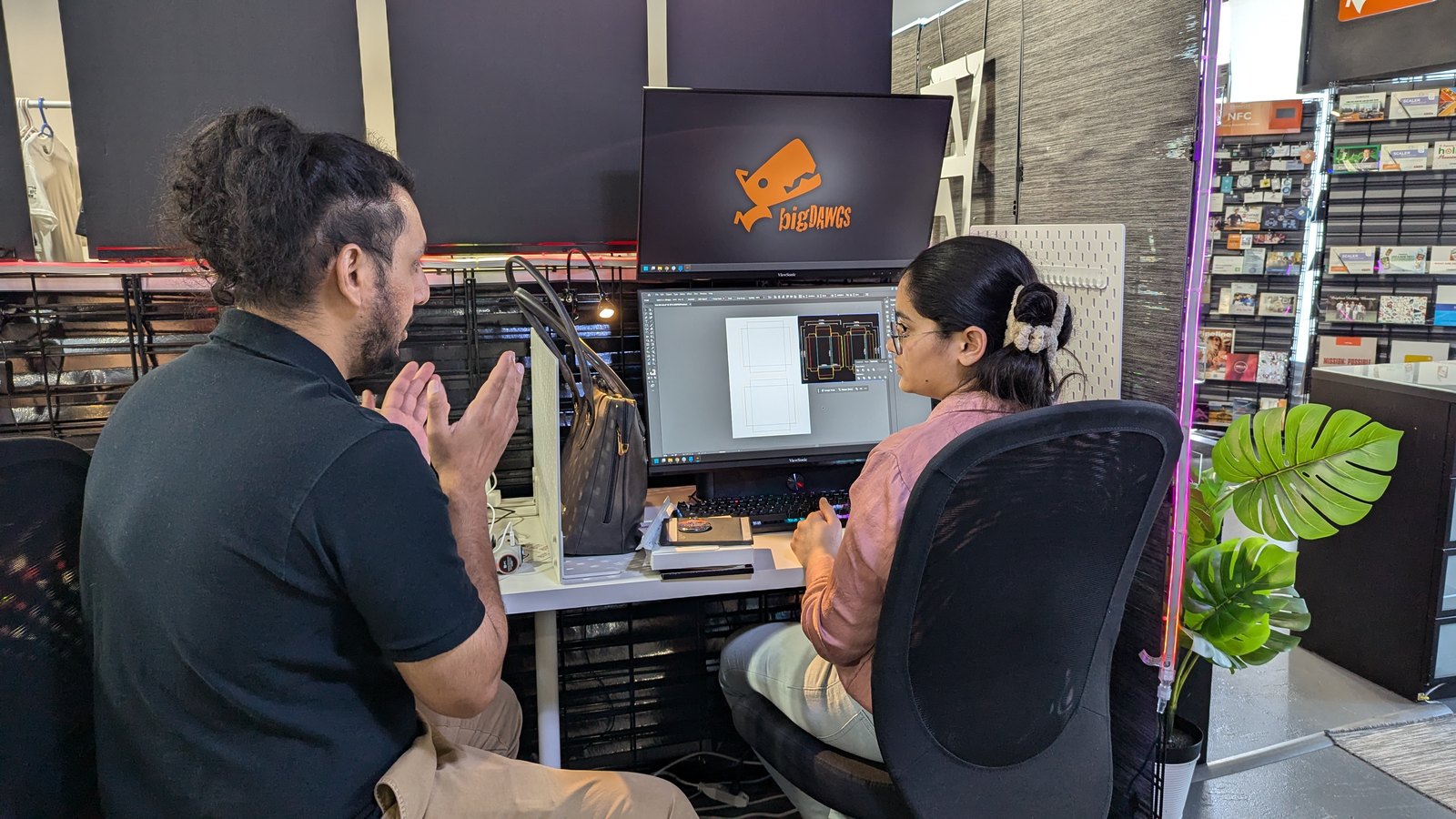
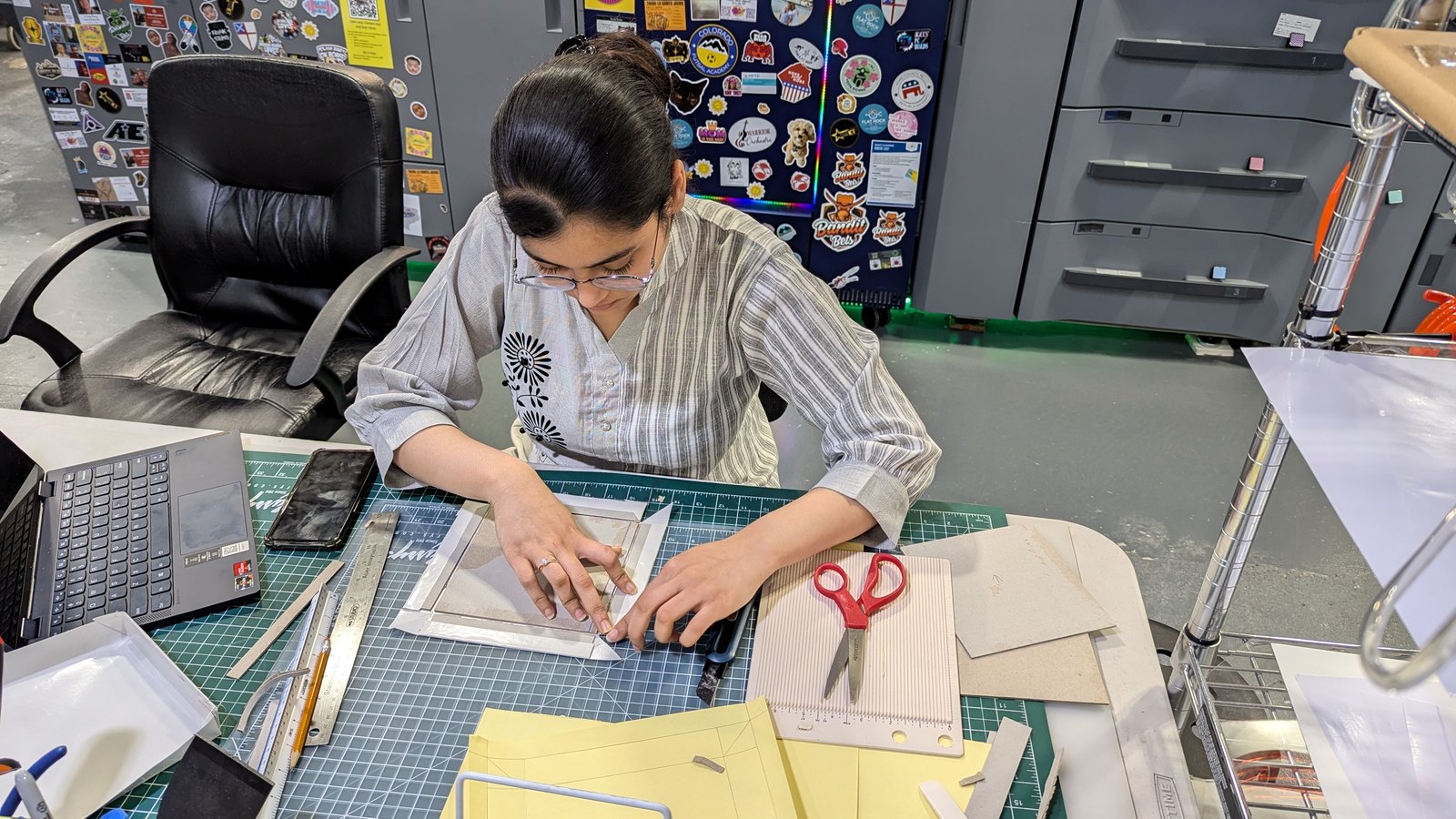
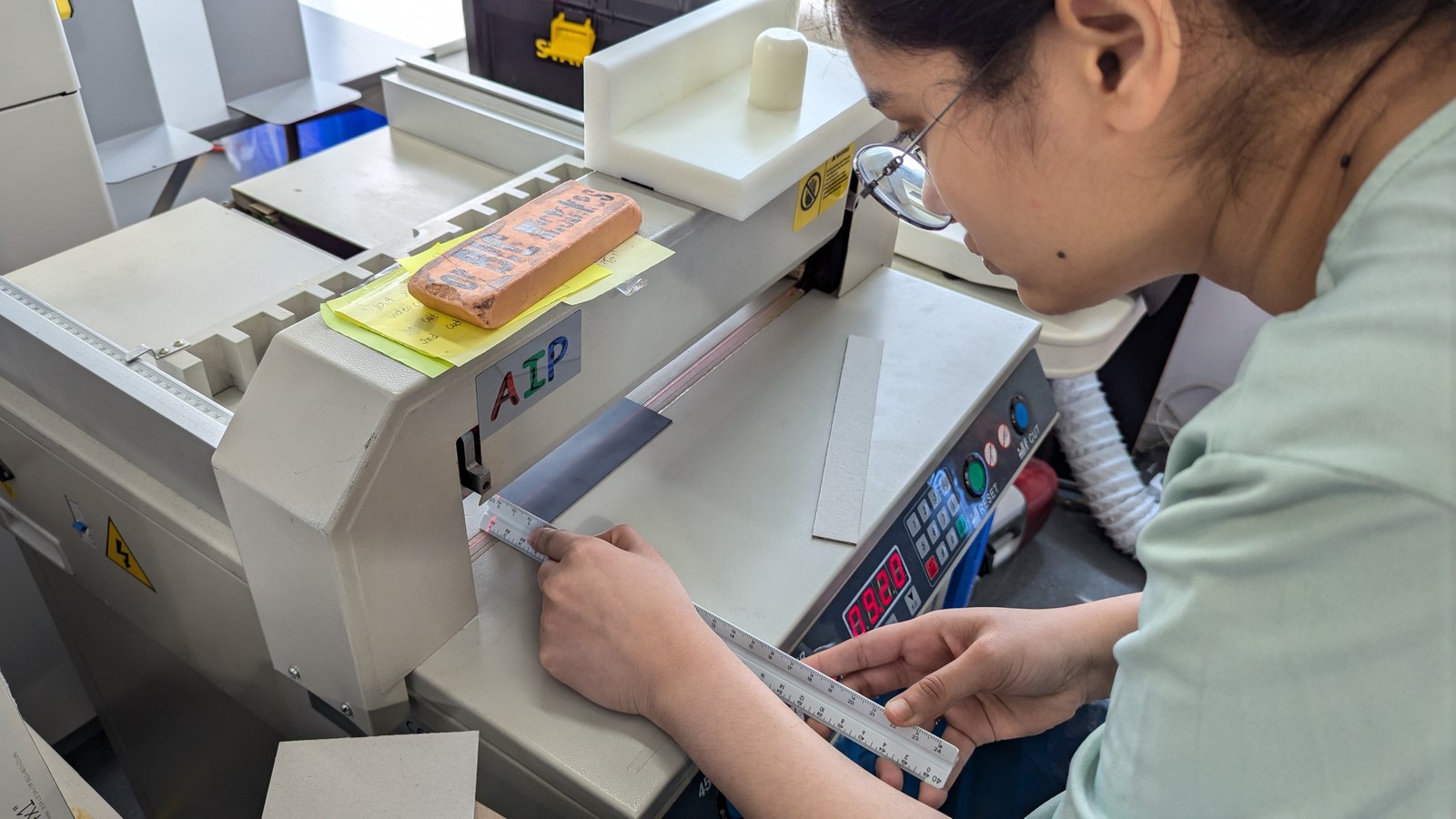
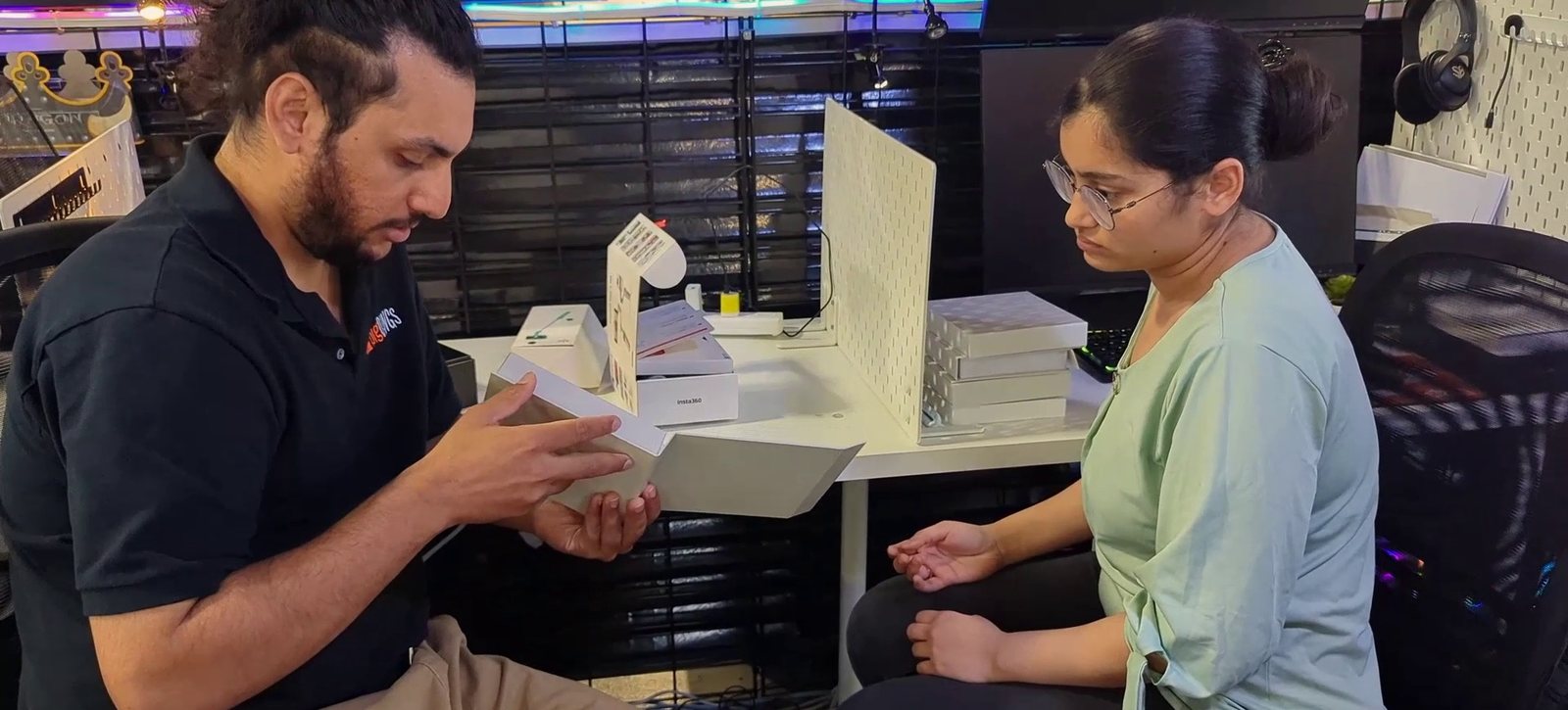
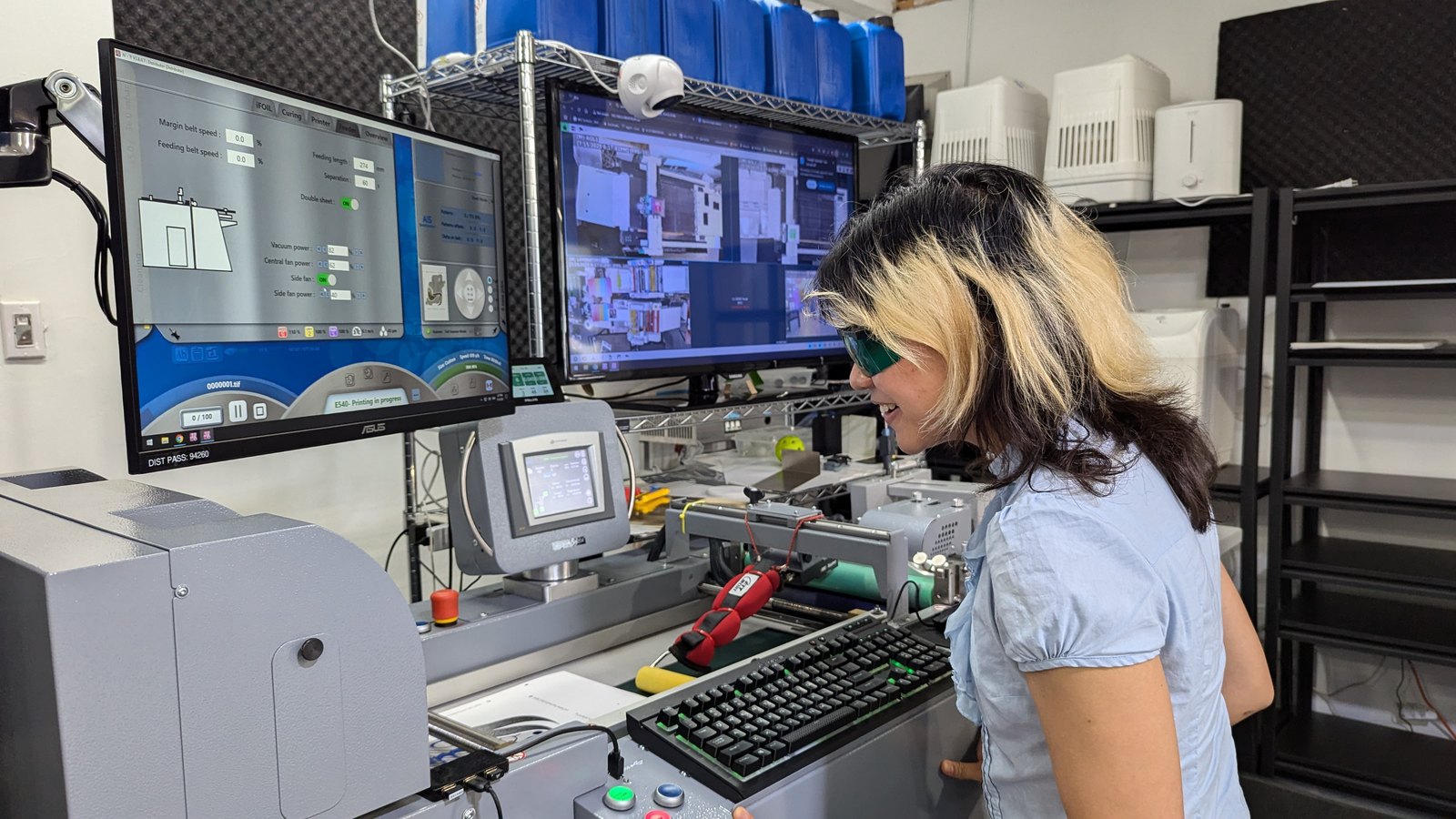
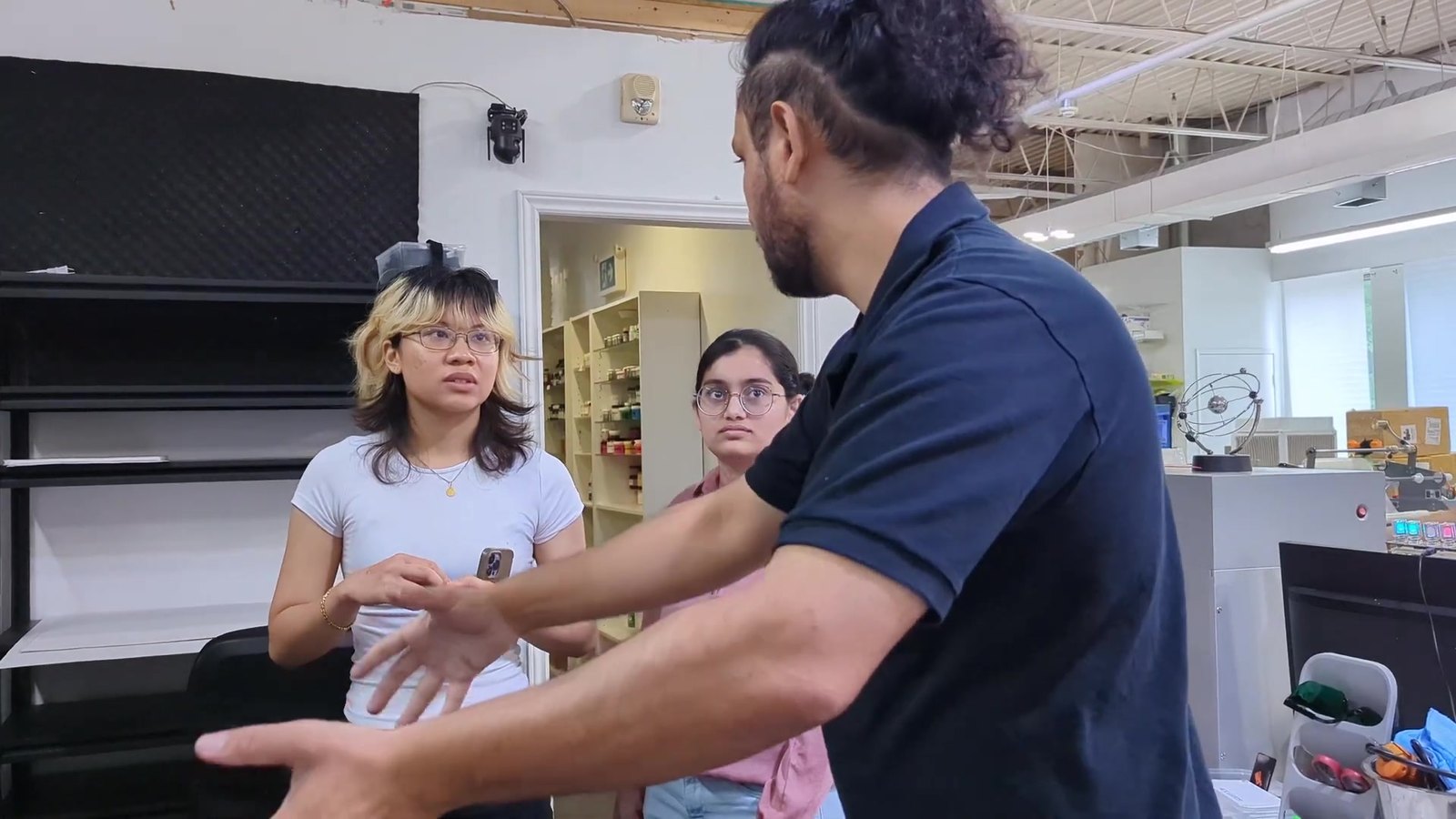
Mentoring at bigDAWGS.
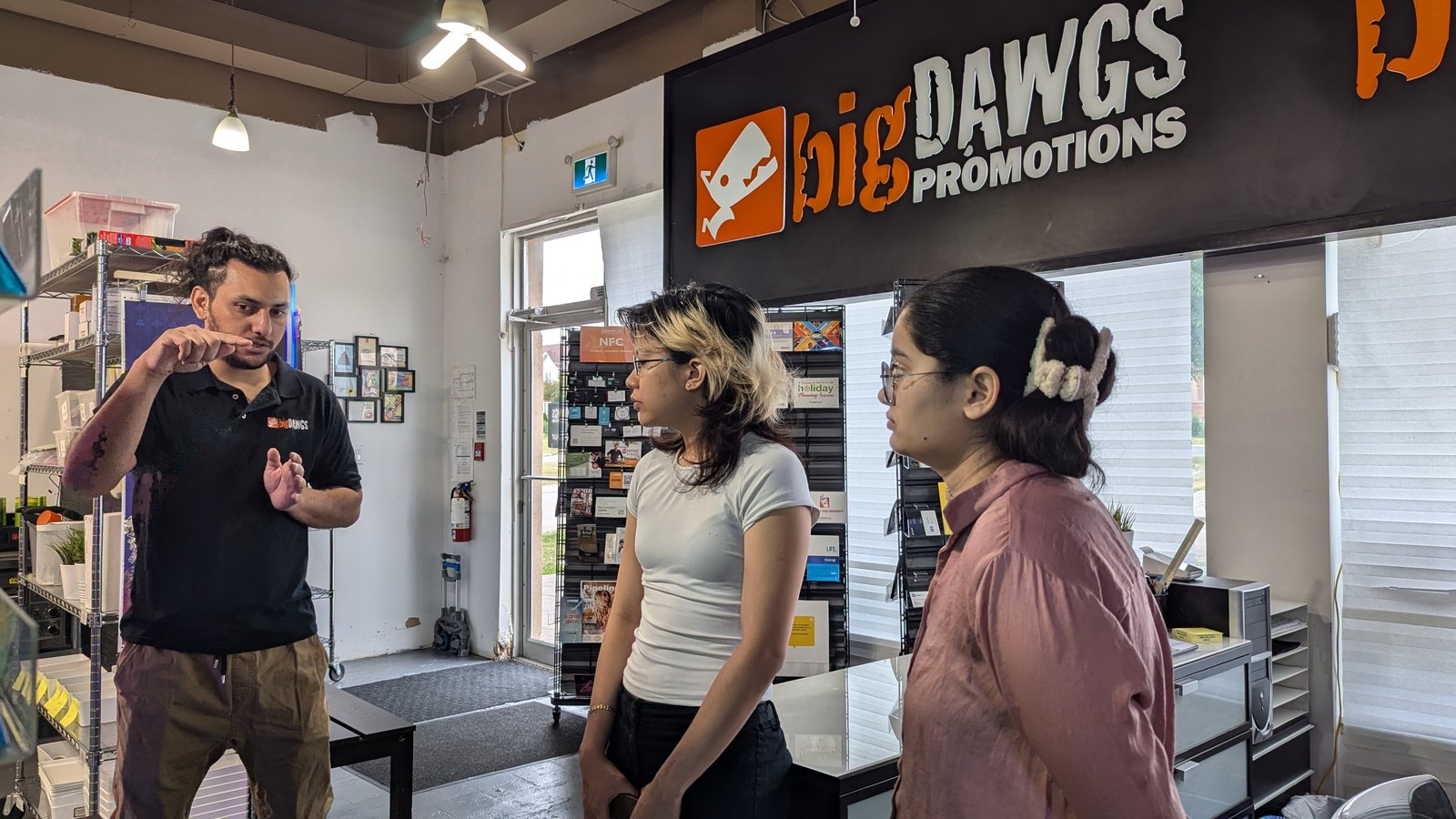
Head of Design at bigDAWGS. I led a design team of 4 and mentored about four Seneca interns a year from 2021, one of whom won an FSEA Bronze.
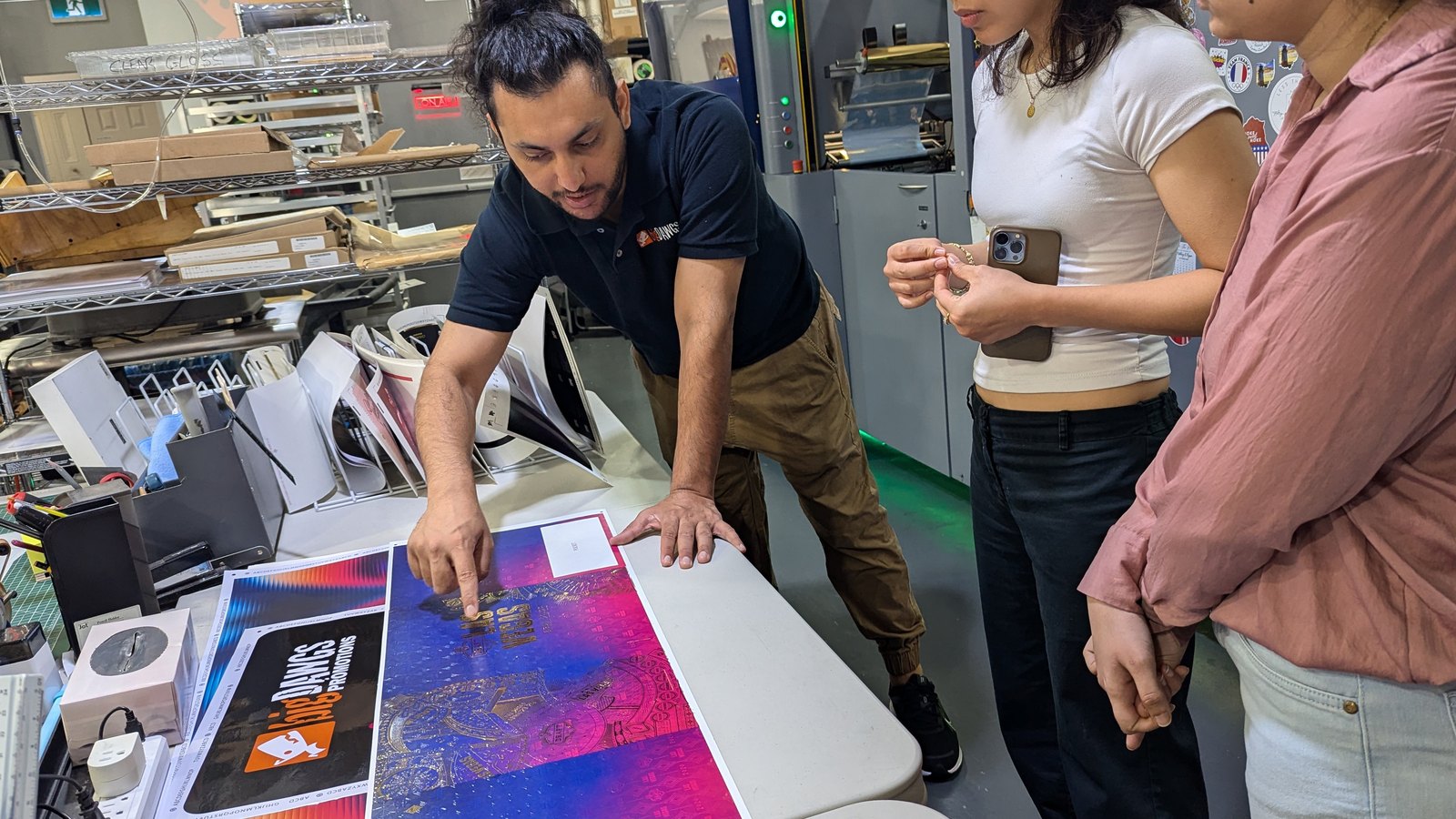
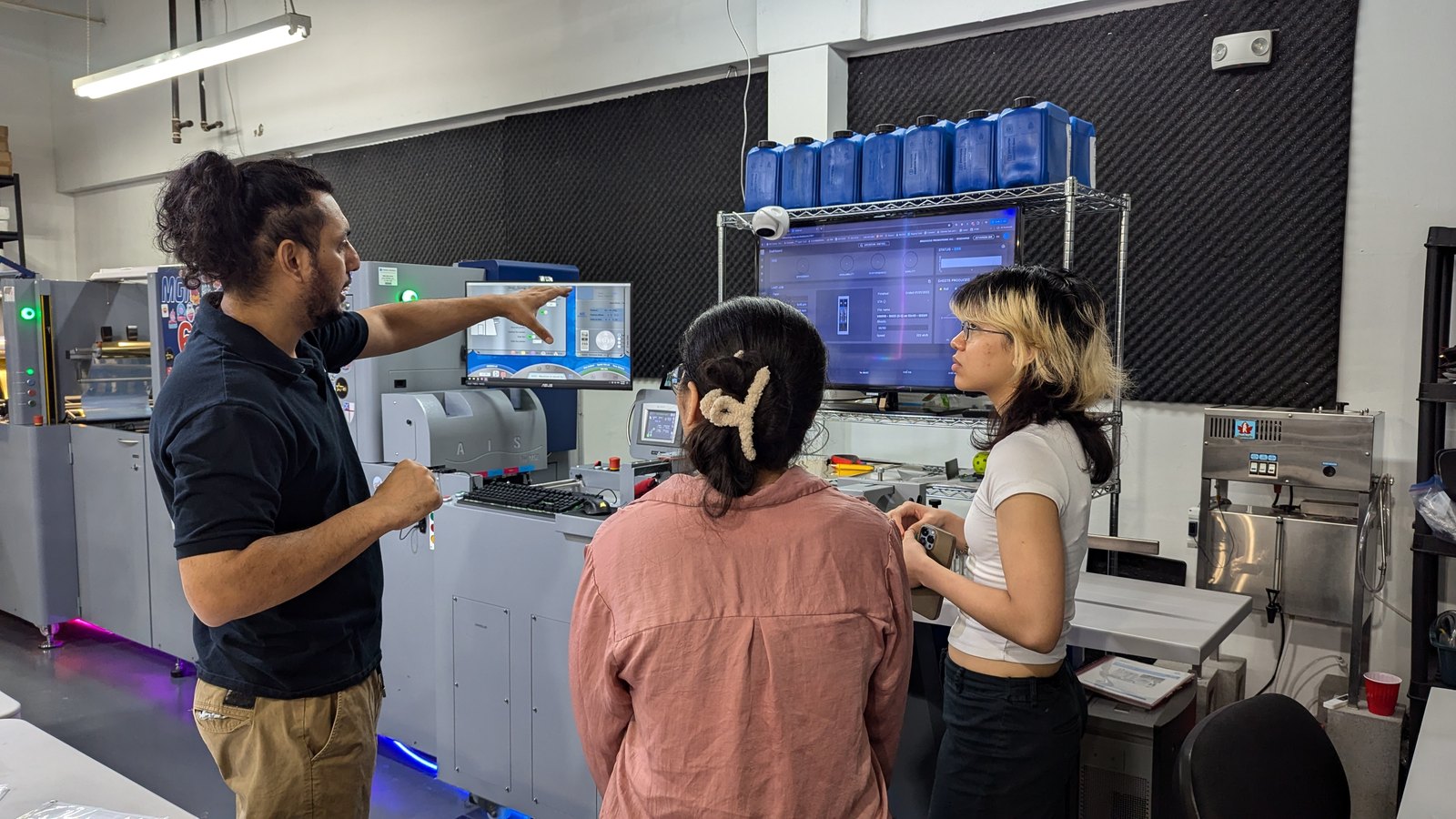
Real pieces, taught from the press up
Most interns came in knowing design software and nothing about embellishment. Here are four of them, each with a piece they designed and took through production.
Teach the craft
How foil and raised varnish patterns build up on the press, how a dieline folds, and how a file gets through prepress.
Set a real piece
Each intern designs one object of their own and takes it through print, finishing and cutting on our equipment.
Critique every round
I review each version, help them find what’s going wrong, and have them rework it until it holds up on press.
A portfolio he could hand over, with his reel inside
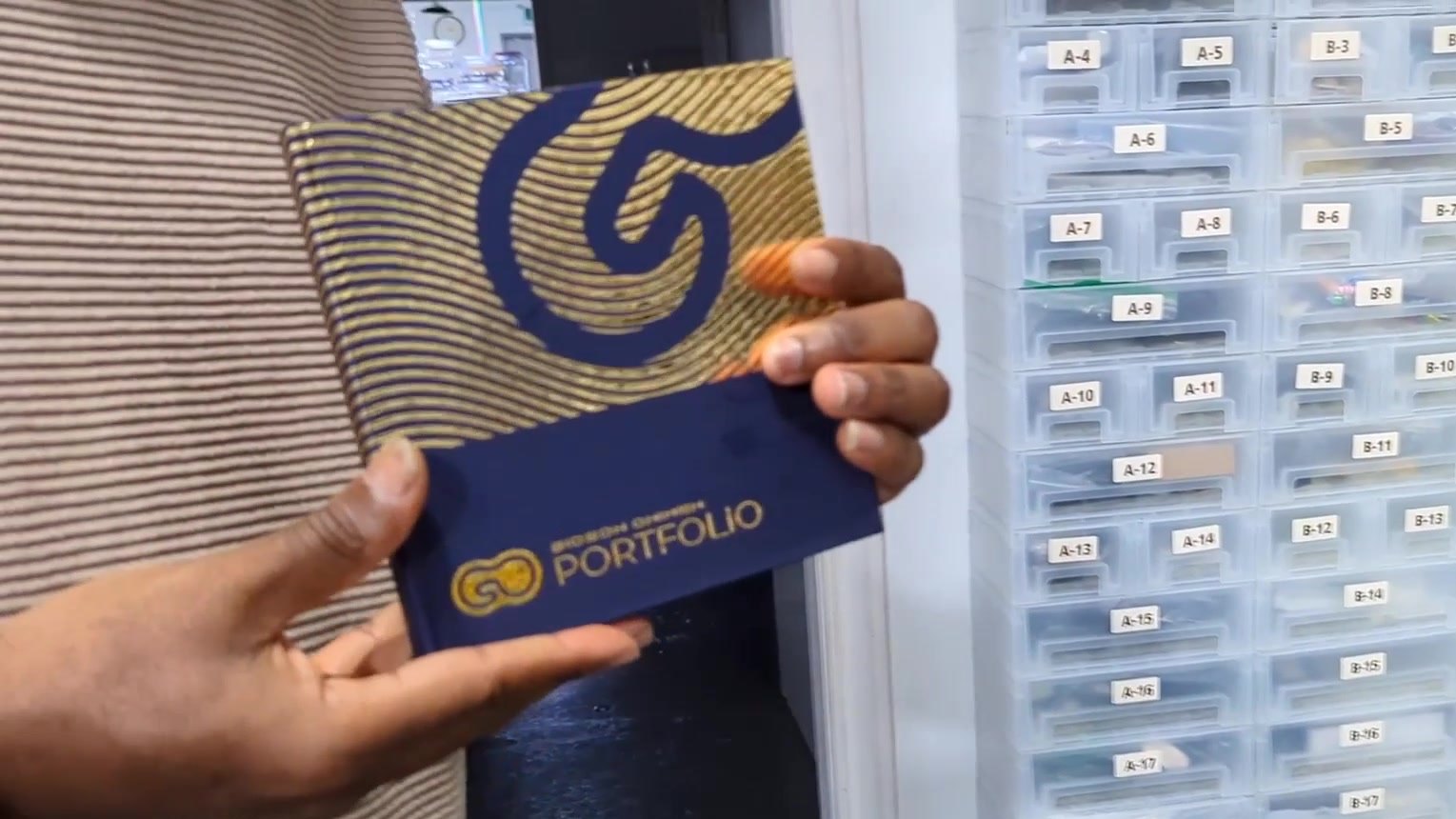
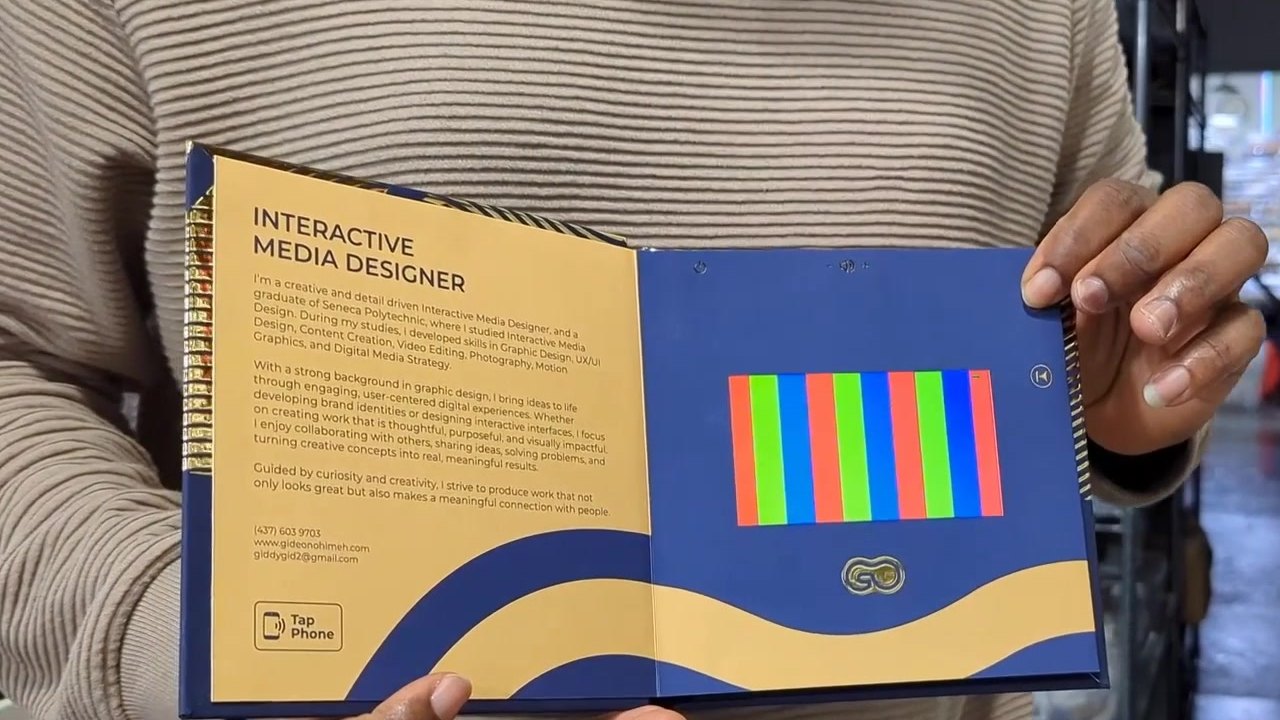
Gideon, an interactive media designer from Seneca, made his portfolio as a hardcover videoBOOK. A screen plays his reel when the book opens, and an NFC tap opens his contact menu. It won Bronze at the 2026 FSEA Gold Leaf Awards, Best Use of Embellishments with Technology.
Starting point
An interactive media designer, new to print and finishing.
What I taught
Raised foil, raised UV and laminations; how our digital finishing and CNC machines run; how NFC chips are programmed; prepress; and how to adjust colour for print.
What I directed
I suggested a hardcover videoBOOK instead of a printed portfolio, and helped him turn his own G mark into the foil wave on the cover.
The fix
On his video card the foil bled and the edges lost their sharpness. Cutting the varnish under it from 43 to 36 microns gave clean foil edges.
Result
FSEA Bronze. He also designed and produced his own business card, video card and mouse pad. See it with the other FSEA pieces
Her first box, from first dieline to NFC
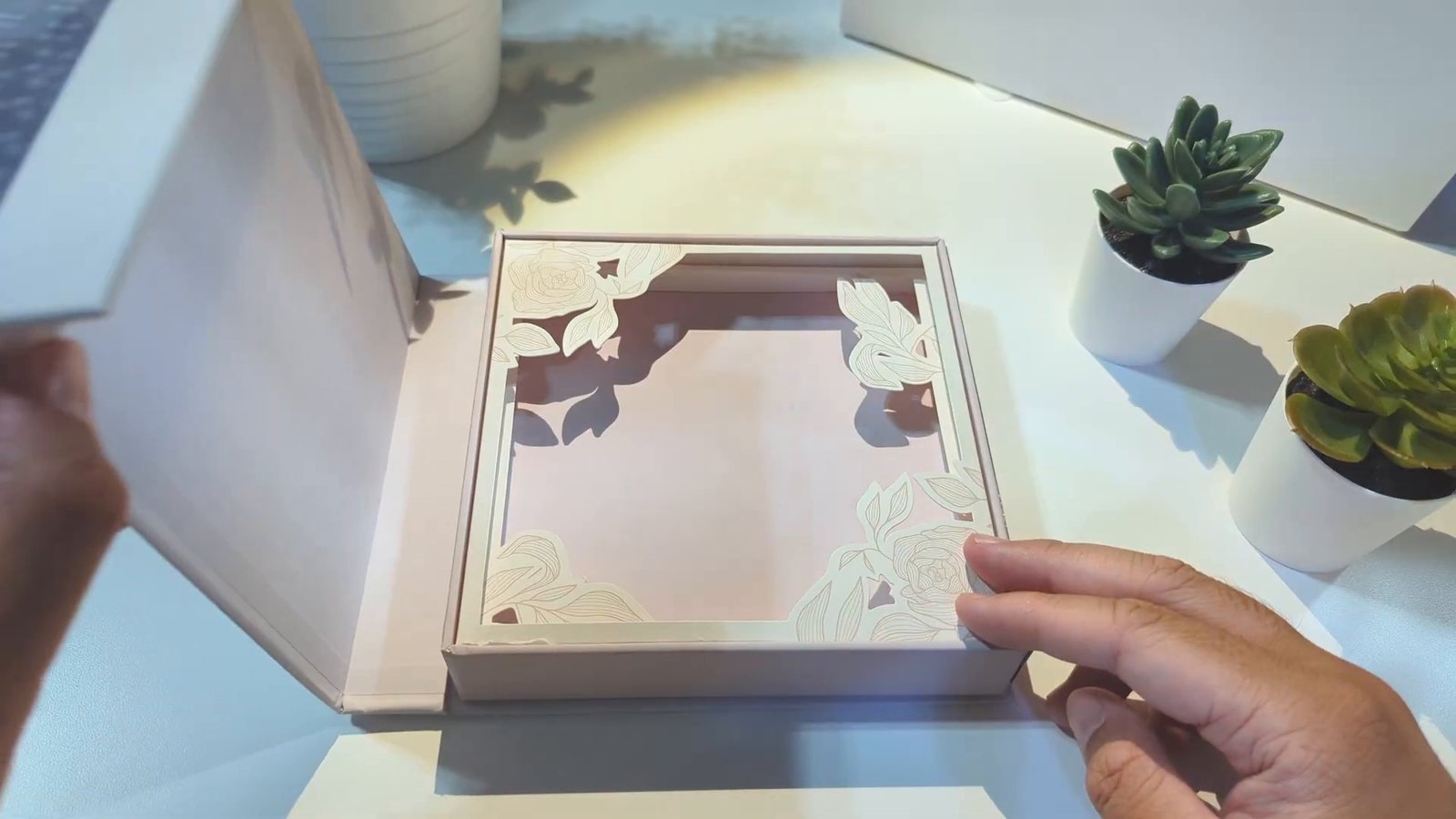
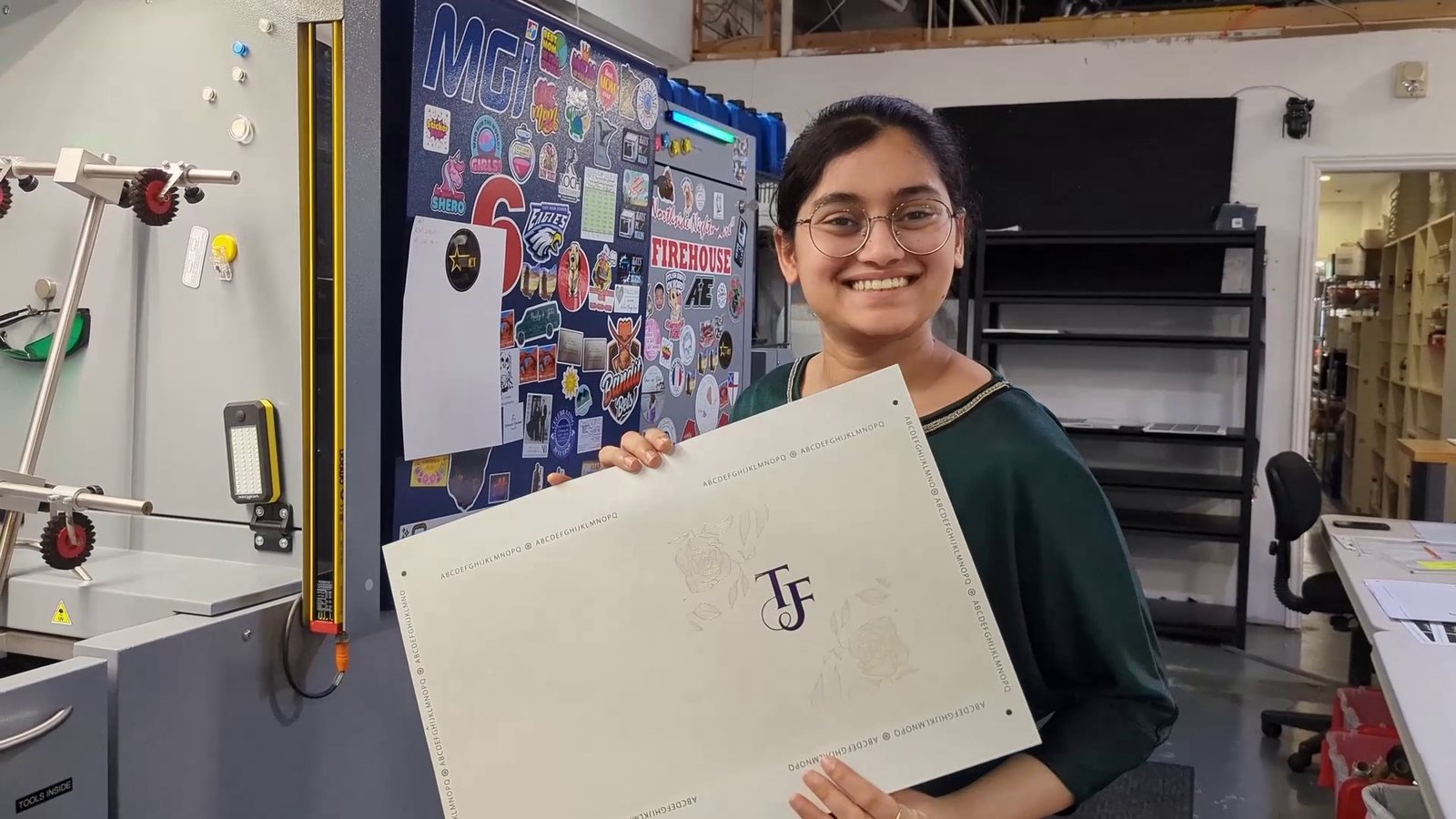
Sana, a graphic design intern, designed a save the date box: a magnetic box with a layered die cut floral insert, rose gold foil and varnish over soft touch, and an NFC chip that opens the event page. A demo piece, made in 2025.
Starting point
A graphic designer, new to packaging.
What I taught
How packaging and embellishment design work: drawing the dieline, cutting it on our digital cutter, and how soft touch, foil and varnish sit on the MGI.
What I directed
I suggested building it from thick chipboard wrapped in printed vinyl sticker sheets, simplified her dies and worked out how it assembles. She tested strip and round magnets; strip magnets hidden inside won.
How it got there
About six prototype boxes, with my feedback after each one.
Result
A finished demo that closes on hidden magnets and opens the event page with one tap. See the full build
A die cut car magnet, redesigned and reprinted
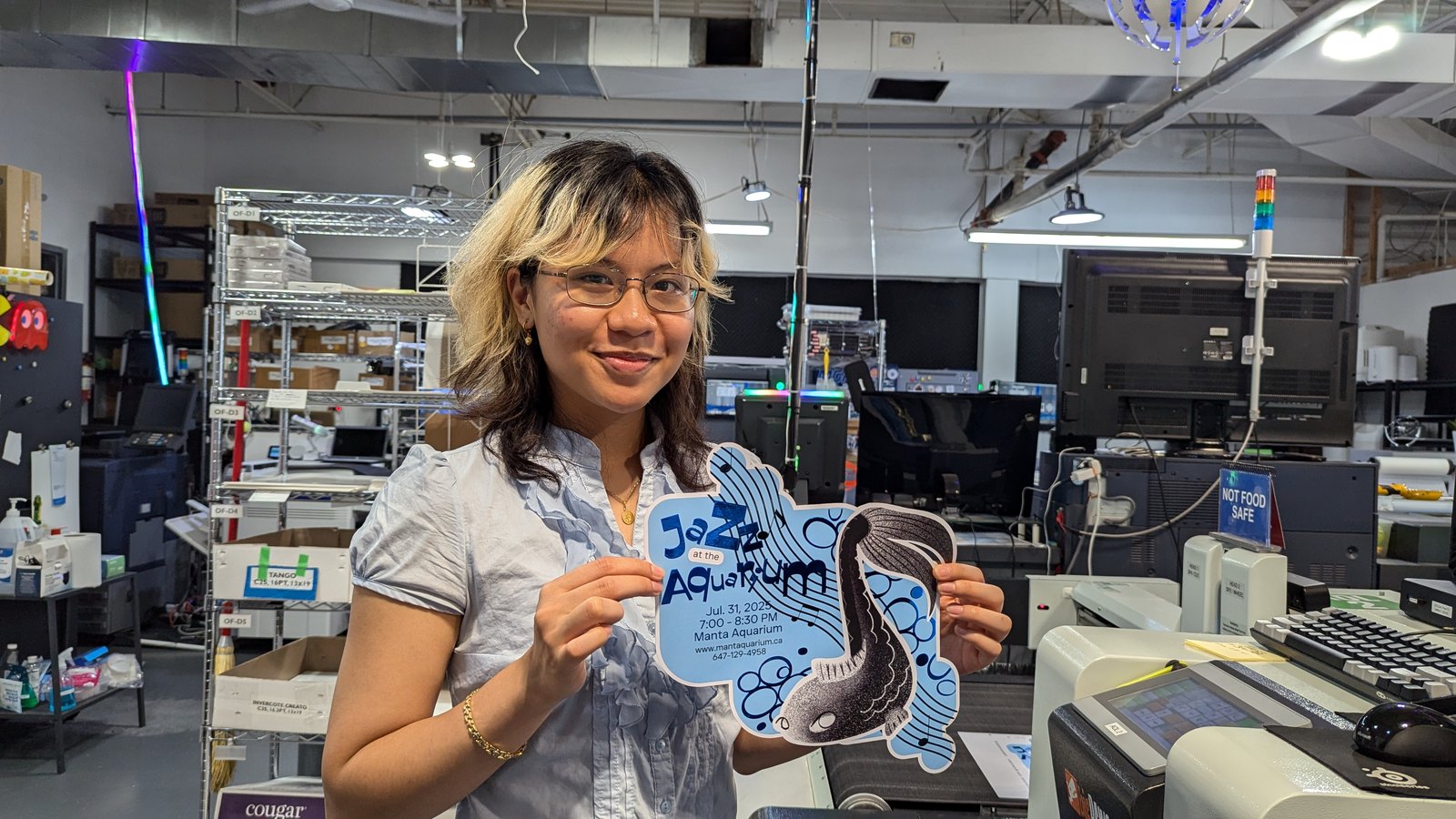
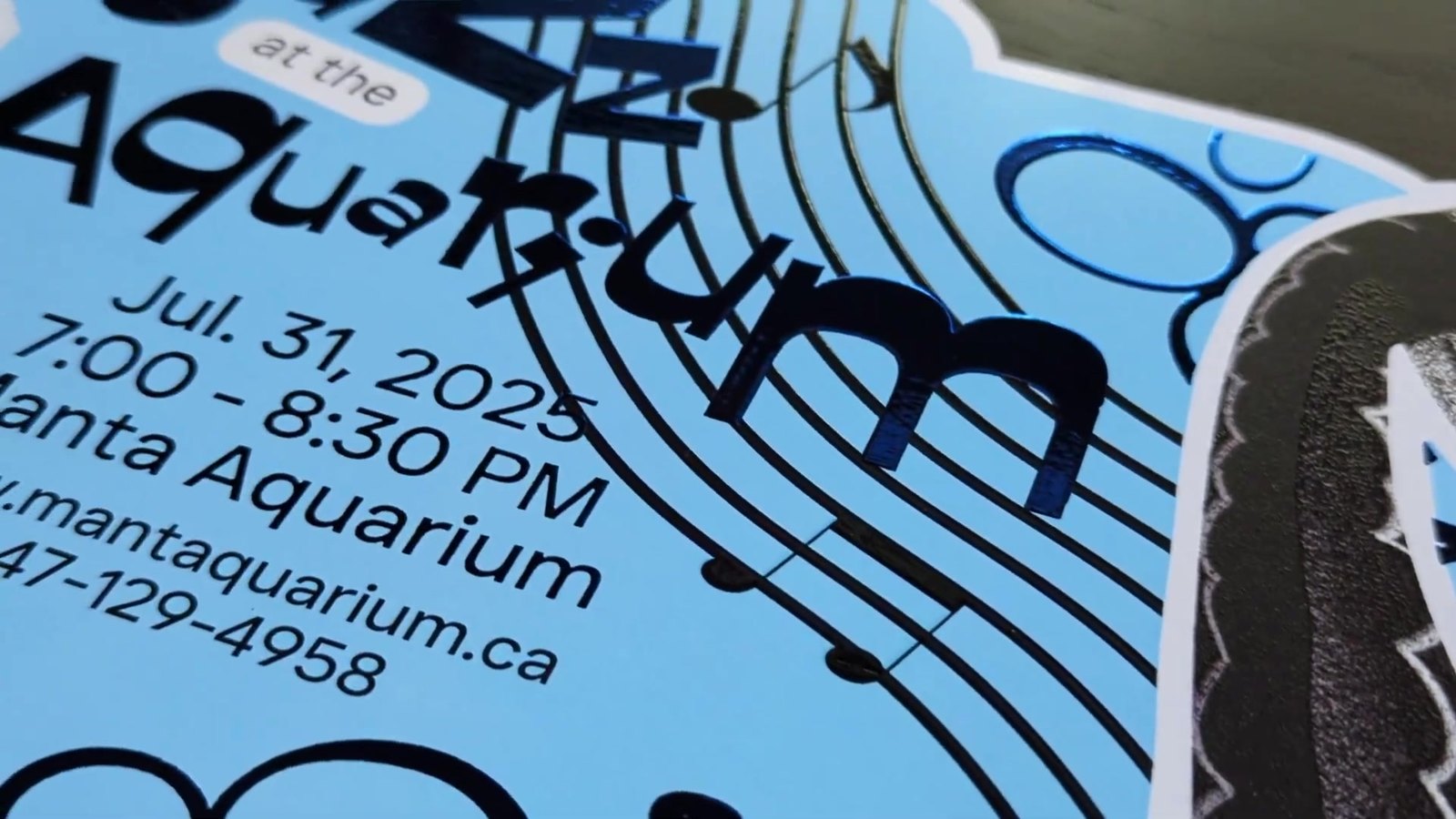
Danielle Mae Lee, a graphic design intern, designed a fish shaped car magnet for a jazz night, Jazz at the Aquarium, with foil and raised texture on a die cut shape.
Starting point
A graphic designer with no embellishment experience.
What I taught
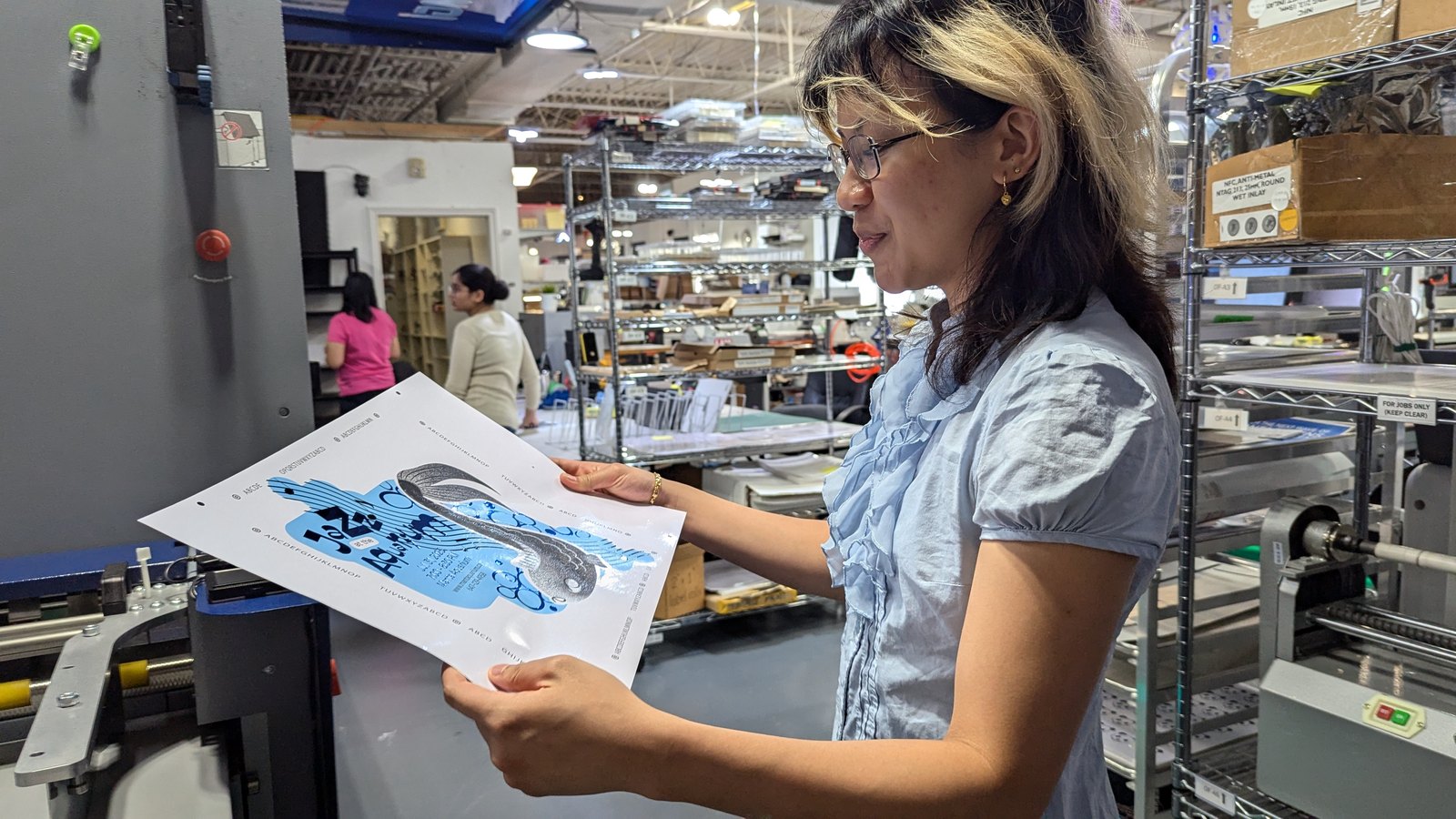
How foil and raised varnish are planned as their own layers, with overprint set in the file; then how a die cut piece is prepped, printed, laminated, cut, sorted and labelled.
What I directed
I critiqued each version and had her rework it. After the first print she redesigned the piece and reprinted it.
Result
A finished die cut magnet: blue foil on the type and bubbles, raised texture on the fish.
His own product line, with a coaster you tap
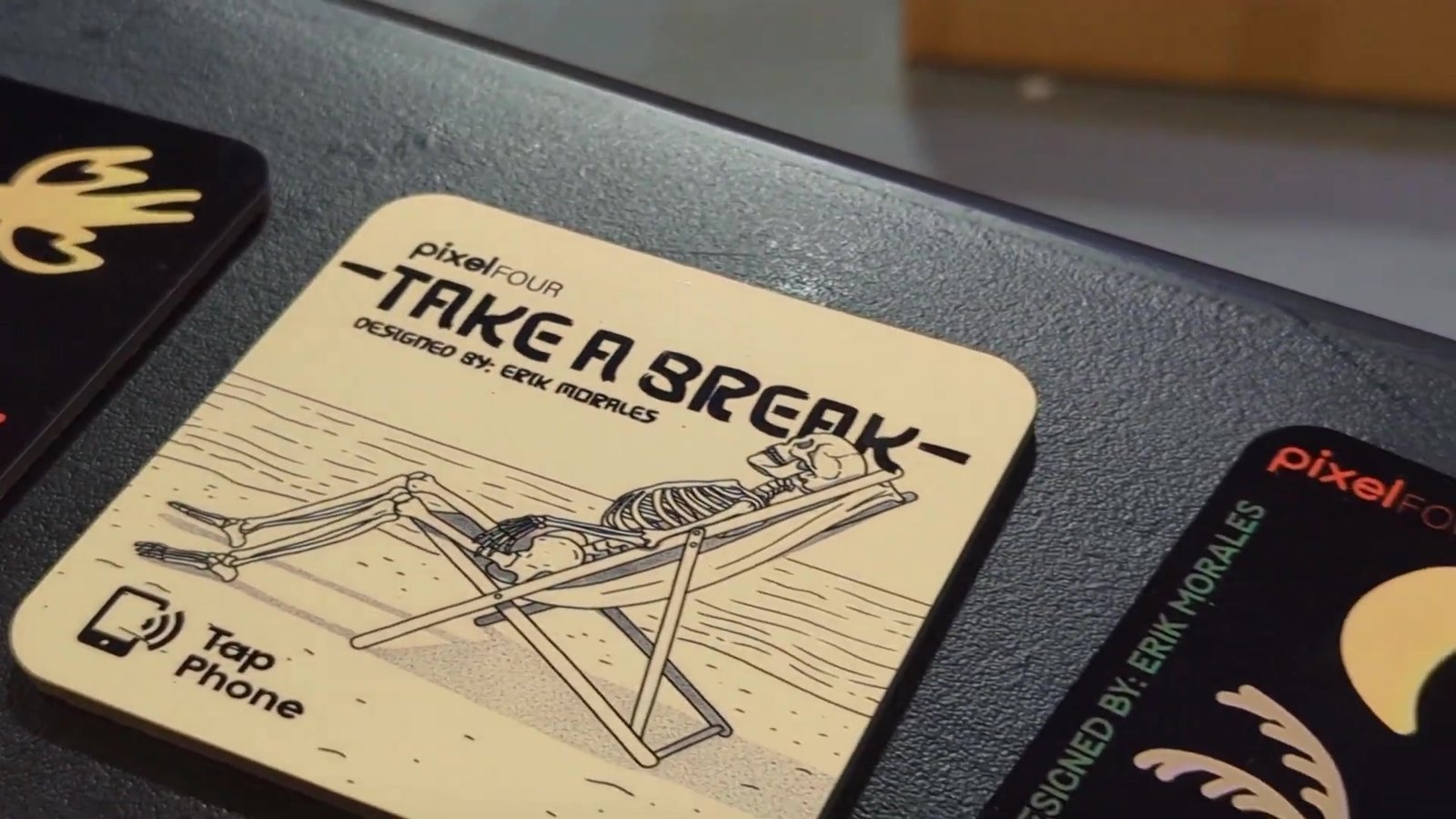
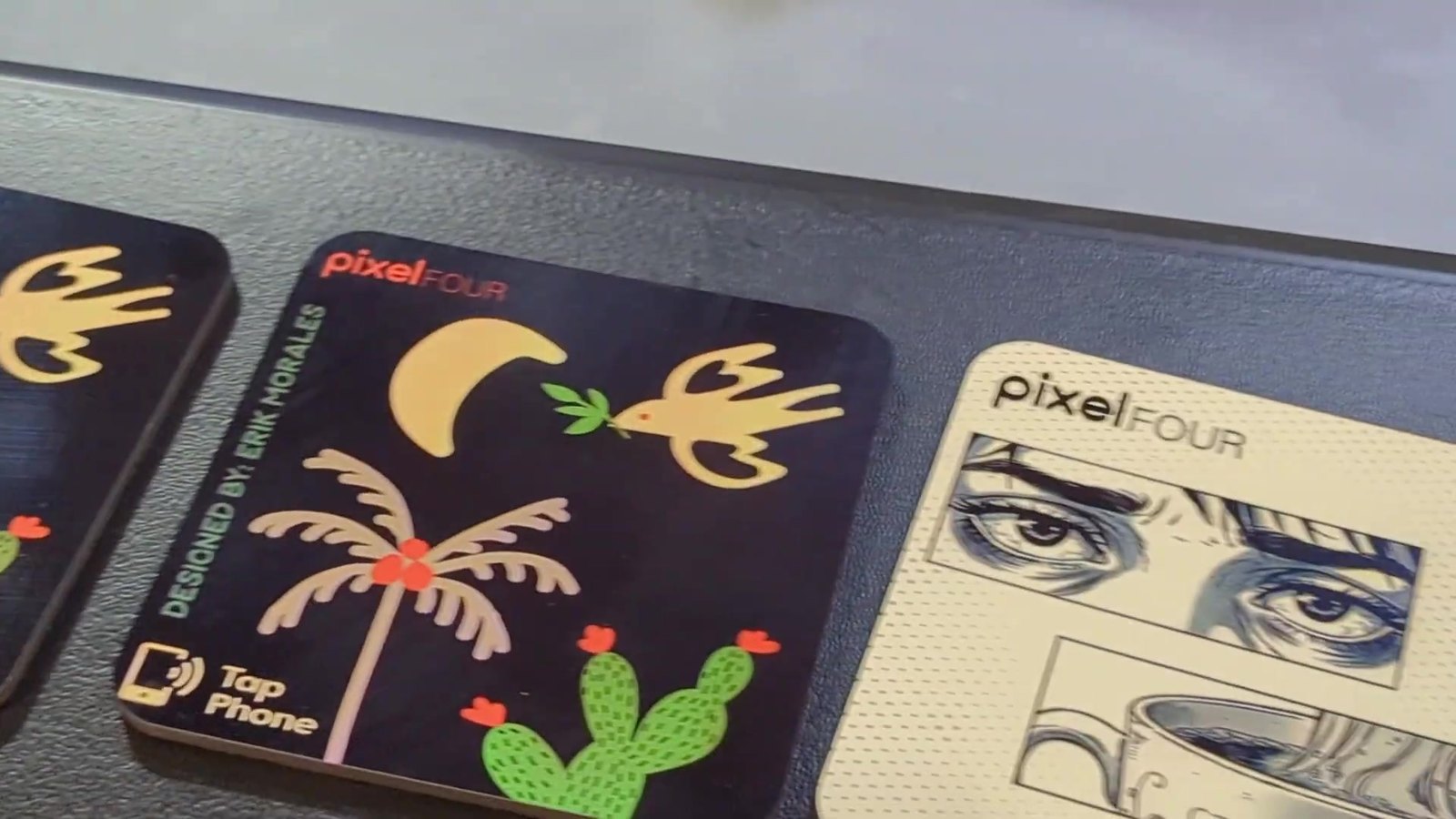
Erik came to go deeper into print design. He designed his own line of mousepads and coasters, including a Take a Break coaster for pixelFOUR that you tap with a phone.
Starting point
A designer new to print production.
What I taught
How a design translates to each print method, which colours work on a reflective coaster surface, and the technical side of pressing, cutting and finishing.
What I directed
I critiqued each design and had him adjust it for the surface it would print on.
Result
A finished set of mousepads and coasters, printed, pressed and cut in house.